
Study Investigates Wire-EDM Process Parameters for Ti-6Al-4V Titanium Alloy
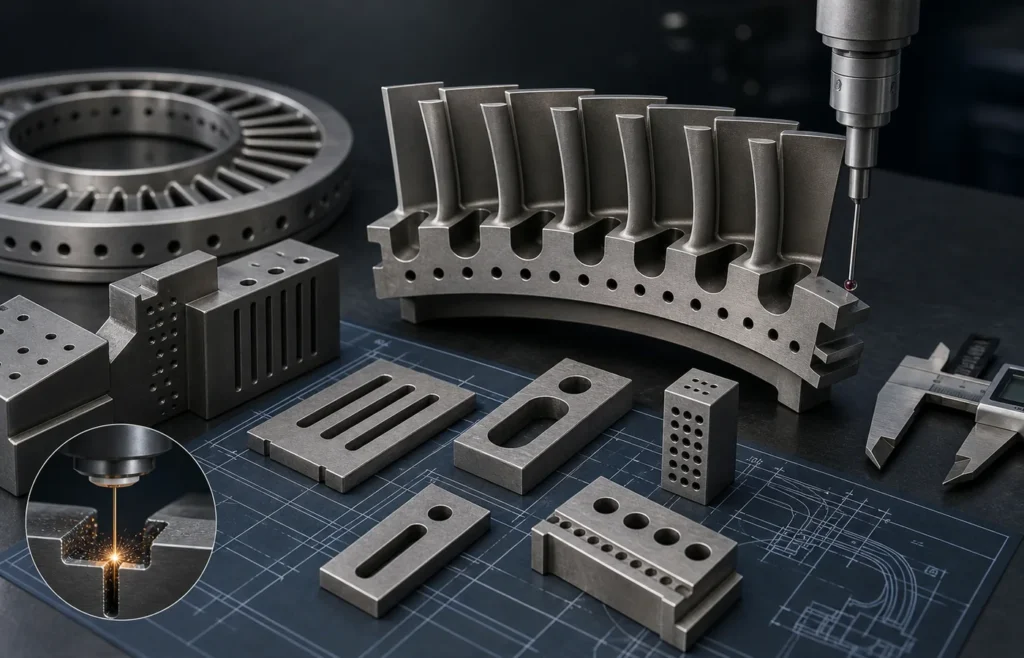
Ti-6Al-4V titanium alloy accounts for nearly 50% of all titanium used in aerospace applications, yet its poor thermal conductivity and high chemical reactivity make conventional machining difficult and costly. Wire electrical discharge machining (Wire-EDM) offers a non-contact alternative, but optimizing its process parameters for this alloy remains a subject of intense research. A recent experimental study published in Nature systematically investigates the effect of key Wire-EDM parameters on material removal rate, surface roughness, and recast layer formation in Ti-6Al-4V.
Experimental Setup and Parameters
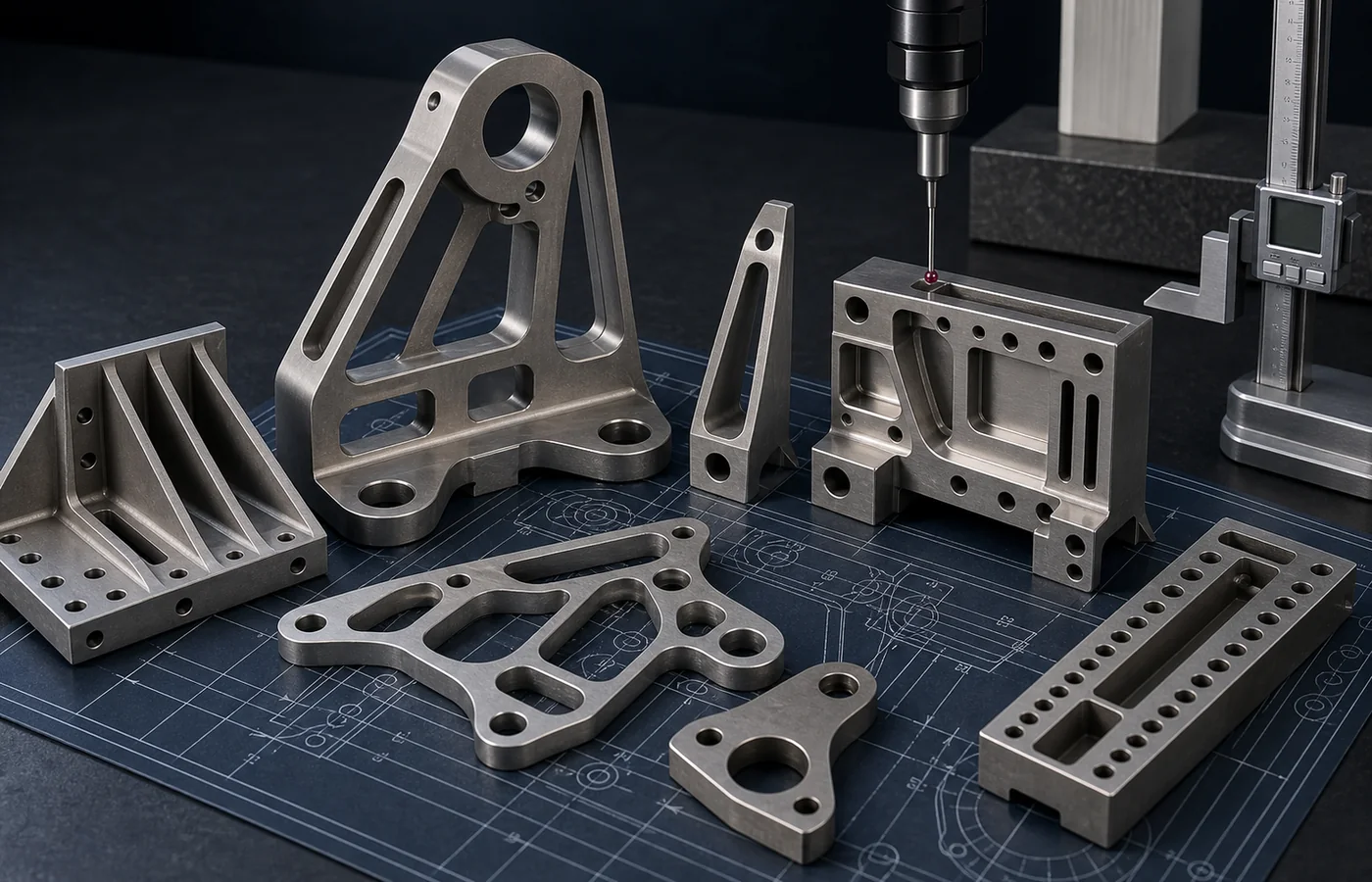
The research team employed a standard Wire-EDM machine with a brass wire electrode and deionized water dielectric. They varied pulse-on time, pulse-off time, peak current, and wire tension across a designed matrix of experiments. Each parameter was tested at three levels to capture linear and interaction effects. The workpiece was a 10 mm thick plate of Ti-6Al-4V. Material removal rate was calculated from volumetric loss, surface roughness was measured with a profilometer, and recast layer thickness was analyzed via scanning electron microscopy.
Key parameters studied included pulse-on time ranging from 2 to 6 μs, pulse-off time from 4 to 12 μs, peak current from 10 to 30 A, and wire tension from 8 to 12 N. The experimental design allowed identification of the most influential factors and their optimal ranges for maximizing productivity while maintaining surface quality.
Key Findings on Surface Integrity
Results showed that pulse-on time and peak current had the strongest positive correlation with material removal rate, but also increased surface roughness and recast layer thickness. Longer pulse durations allowed more energy per discharge, enhancing erosion, but also caused larger craters and thicker recast layers. Conversely, higher wire tension improved dimensional accuracy and reduced surface defects by stabilizing the wire vibration.
The optimal parameter combination for balanced performance was found at moderate pulse-on time (4 μs), low peak current (15 A), and high wire tension (12 N). Under these conditions, material removal rate reached 1.8 mm³/min, surface roughness averaged 2.4 μm Ra, and recast layer thickness was below 10 μm. The study also noted that pulse-off time had minimal impact on material removal but affected recast layer thickness at extreme values.
Implications for Precision Machining
These findings provide a data-driven framework for selecting Wire-EDM parameters when machining Ti-6Al-4V for high-value components such as turbine blades and medical implants. The ability to simultaneously achieve reasonable removal rates and excellent surface integrity is critical in industries where part quality and production speed must be balanced.
For shops already performing Wire EDM Machining of titanium, the study validates that careful control of pulse parameters can reduce recast layer defects. Detailed guidance on EDM for Titanium is available to help machinists apply these insights. Furthermore, understanding Wire EDM Tolerance Guide ensures parts meet tight specifications.
The experimental results offer a clear path to improve process reliability and reduce trial-and-error on the shop floor. By systematically mapping the parameter space, this work supports more efficient and predictable machining of difficult-to-cut alloys.
Recap: The study demonstrates that optimizing pulse-on time, peak current, and wire tension can achieve material removal rates of 1.8 mm³/min with surface roughness below 2.5 μm Ra and recast layer under 10 μm for Wire-EDM of Ti-6Al-4V.
Why This Matters
Wire-EDM is indispensable in aerospace and medical manufacturing for its ability to machine titanium alloys without mechanical stress. This study provides empirical data that helps precision machining shops optimize cutting parameters, reducing defects and cycle time. The findings directly support cost-effective production of high-integrity components, advancing manufacturing capabilities for critical industries.