
Exploring Drilling Control Variables for Enhanced Electric Discharge Machining Performance in Aluminum Hybrid Nanocomposite – Wiley Online Library
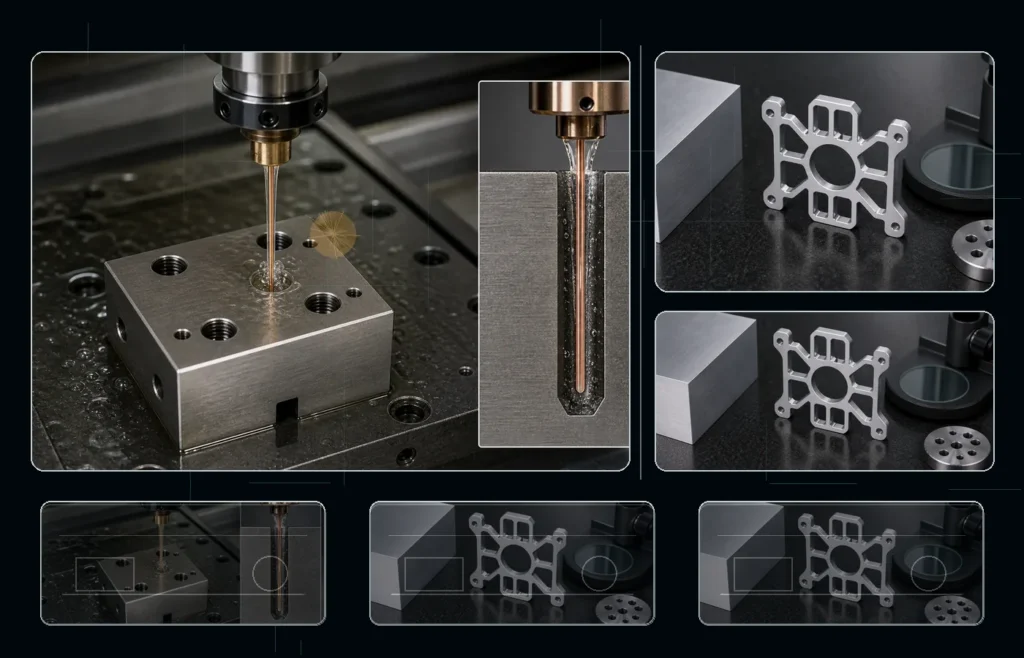
Electric discharge machining (EDM) remains a critical process for shaping difficult-to-machine materials, yet advanced composites like aluminum hybrid nanocomposites present unique challenges due to their heterogeneous structure. New research published by Wiley Online Library investigates how adjusting key drilling control variables can enhance EDM performance when working with these materials, focusing on small hole drilling applications.
Key Drilling Parameters Investigated
The study systematically examines the influence of several process parameters on machining outcomes for an aluminum hybrid nanocomposite. Researchers varied pulse on time, pulse off time, peak current, and gap voltage to assess their effects on performance metrics.
- Material removal rate improved significantly with optimized pulse on time and peak current combinations.
- Electrode wear rate was minimized by carefully balancing pulse off time and gap voltage.
- Surface roughness, a critical quality measure for small hole drilling, showed strong dependence on peak current settings.
- The aluminum hybrid nanocomposite, reinforced with ceramic particles, required parameter adjustments distinct from those used for conventional aluminum alloys.
These findings align with ongoing work at the EDM Materials Hub, which explores how different material compositions affect machining strategies and outcomes.
Implications for Industry
For manufacturers employing Small Hole EDM Drilling in sectors such as aerospace and automotive, these insights offer a path toward more efficient and precise processing of advanced composites. By selecting optimal parameter sets, companies can reduce tool wear, improve dimensional accuracy, and achieve better surface finishes in components made from aluminum hybrid nanocomposites. This is particularly relevant for producing lightweight structural parts, fuel nozzles, and cooling holes where tight tolerances are mandatory.
Moving forward, further research is expected to expand these findings to other composite formulations and EDM processes, potentially integrating machine learning for real-time parameter adjustment and adaptive control.
Why This Matters
This study addresses a critical gap in machining advanced composites, which are notoriously difficult to process with conventional methods. Optimizing EDM parameters for aluminum hybrid nanocomposites could enable more efficient production of lightweight components in aerospace and automotive industries, reducing costs and improving part performance.