
Material Review
AZ91 Magnesium Alloy EDM Machining
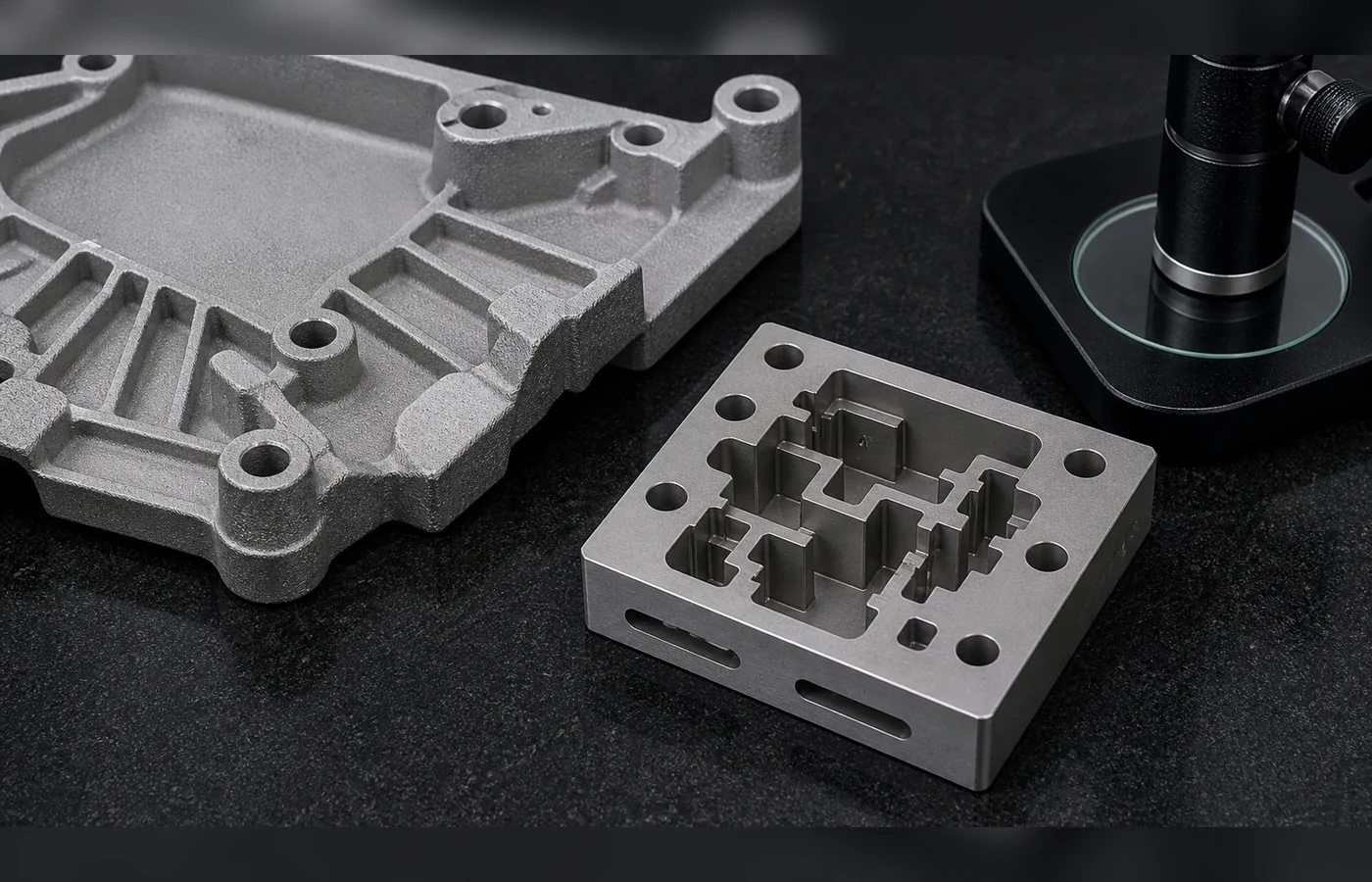
AZ91 Magnesium Alloy is a cast magnesium-aluminum-zinc alloy whose porosity and casting condition can vary locally. It is compatible with EDM, while feature access selects Wire, Sinker, Small Hole, or Micro EDM and the supplied condition sets support, finishing, surface control, and inspection.
Quick Answer
AZ91 Magnesium Alloy is electrically conductive and can be machined by EDM. Feature access selects the process; the exact condition then sets support, finishing, post-processing, and inspection. The main concern is that casting porosity, thin walls and surface reactivity can destabilize finish and edge quality.
Key Material Decisions
How This Material Behaves
Its condition changes dimensional stability, discharge response, surface-integrity risk, and the finishing plan.
Choosing the Right Condition
Select Wire EDM for through profiles, Sinker EDM for blind cavities, Small Hole EDM for small or deep holes, and Micro EDM for miniature features. State the exact AZ91 Magnesium Alloy condition before assigning tolerance and finish.
Risks to Manage
The main material risk is clear: Casting porosity, thin walls and surface reactivity can destabilize finish and edge quality. We manage it with condition-aware support, selective finishing, and inspection of the functional faces rather than one whole-part requirement.
How the EDM Route Is Selected
Feature access chooses the EDM route. The supplied AZ91 Magnesium Alloy condition then changes support, discharge energy, finishing passes, post-processing, and the method used to verify the result.
AZ91 Magnesium Alloy EDM Process Reference
| What you're asking | What you can expect |
|---|---|
| Through profiles | Wire EDM |
| Blind cavities and ribs | Sinker EDM |
| Small or deep holes | Small Hole EDM |
| Miniature holes, slots, or cavities | Micro EDM |
| Material-specific concern | casting porosity, thin walls and surface reactivity can destabilize finish and edge quality |
Material Condition Reference
| Condition | What to expect | Watch out for | Surface notes |
|---|---|---|---|
| as-cast | Use stable support and economical roughing. | Clamping and material condition can move delicate features. | Apply fine finishing only to functional faces. |
| solution-treated | Balance dimensional stability with feature-specific finishing. | Residual stress can shift thin sections or small details. | Identify wear, seal, fatigue, or contact surfaces. |
| aged condition | Use conservative energy and selective inspection. | Finished or hardened surfaces can be sensitive to edge damage and recast. | Use lower-energy finishing or post-processing where function requires it. |
How This Material Behaves
AZ91 magnesium is a cast or heat-treated alloy with a heterogeneous aluminum-rich microstructure. In EDM, this means local phases can erode differently, producing texture variation, while reactive debris and thin cast walls require tightly controlled flushing. Keep the work fully submerged under an approved process, support fragile cast features, and apply corrosion protection promptly after cleaning.
Surface Integrity and Post-Process
For AZ91 Magnesium Alloy, avoid unsupported absolute capability claims and define cleaning, residue and handling requirements before production. Mark fatigue, seal, wear, contact, corrosion, or cosmetic faces separately so nonfunctional surfaces are not over-finished.
AZ91 Magnesium Alloy Planning Checkpoints
- State the exact grade and supplied condition: as-cast, solution-treated, and aged condition.
- Mark through features, blind forms, holes, and miniature details so each feature is routed to the correct EDM process.
- Identify critical datums, functional surfaces, corrosion protection, and any dimensional or metallurgical inspection.
Typical Parts
- lightweight prototypes
- instrument frames
- special fixtures
Limits and Better Alternatives
Main Limit
For AZ91 Magnesium Alloy, EDM requires a conductive workpiece and offers little advantage on open, loose-tolerance geometry that conventional machining can reach faster. Casting porosity, thin walls and surface reactivity can destabilize finish and edge quality.
Consider Another Route When
Use CNC or grinding for accessible open geometry and simple precision faces; reserve EDM for hardness, access, sharp corners, deep small holes, and burr-free edges.
Practical Next Step
For a AZ91 Magnesium Alloy EDM quote, send the drawing, exact material condition, critical dimensions, functional surface requirements, quantity, and inspection expectations. If the condition or process is uncertain, send the available material specification and drawing for review.
Practical Takeaway
AZ91 Magnesium Alloy is suitable for EDM. Feature access selects the process, and the supplied condition determines support, finishing, surface control, and inspection.
Additional Project Information
Include application, destination and end-use notes together with the material, quantity and drawing requirements.
Project Details for Technical Review
Include application and end-use notes when they affect material, inspection, documentation, or export review.
- Material: AZ91 Magnesium Alloy
- Drawing or part sketch
- Material grade
- Thickness / part size
- Quantity
- Tolerance and critical dimensions
- Surface finish or inspection requirement
STEP/STP, DXF, DWG, PDF, IGS/IGES or ZIP.
Confidential drawing review. NDA support available on request.