
Technical Reference
Micro EDM Hole Size Guide Technical Reference
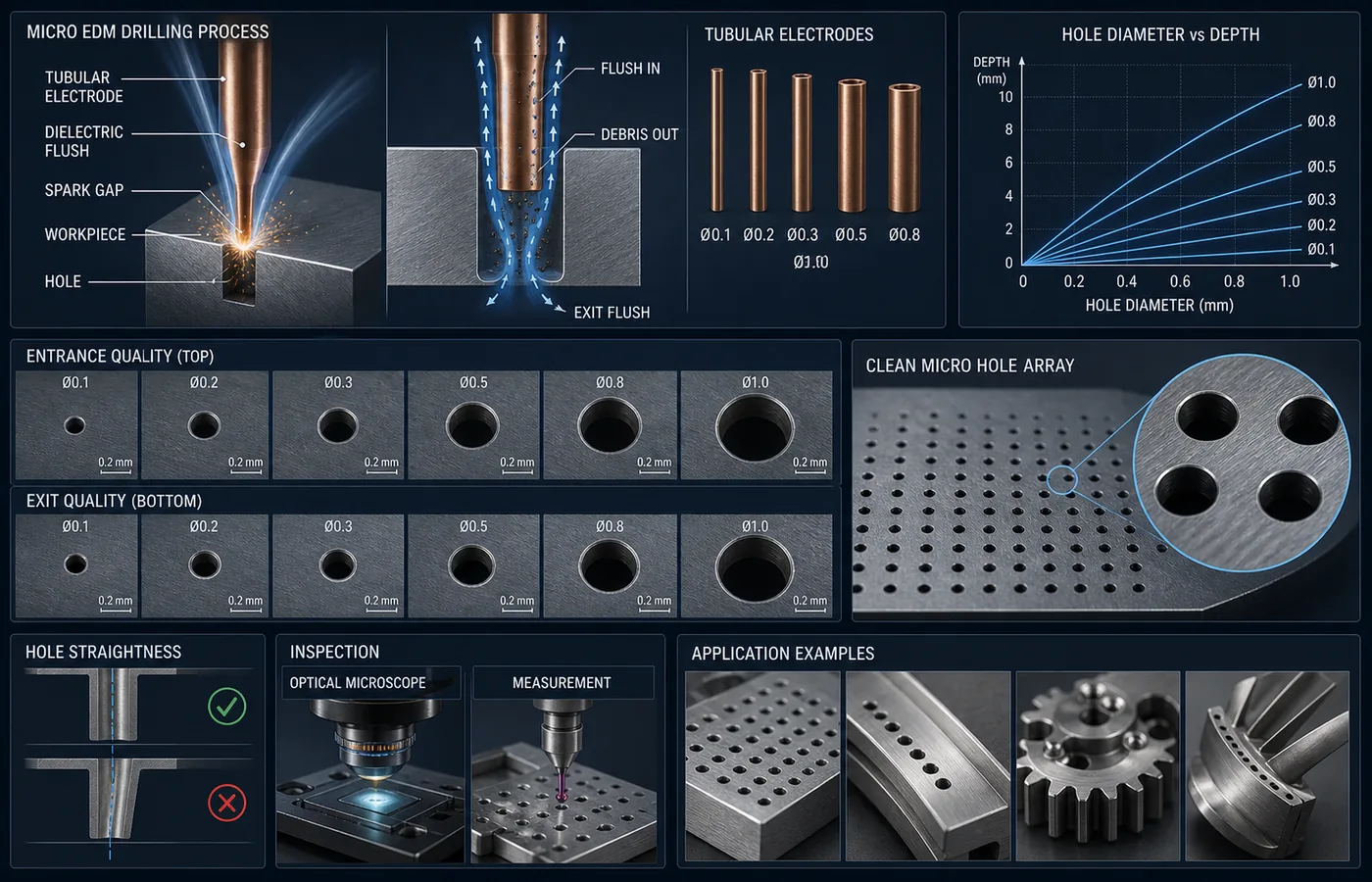
Micro EDM hole size is selected from electrode diameter, feature depth, aspect ratio, wear allowance, edge radius, flushing, and measurement resolution. Micro-hole diameter cannot be specified without depth, taper, electrode wear, flushing route, and inspection method.
Quick Answer
Micro EDM hole size is selected from electrode diameter, feature depth, aspect ratio, wear allowance, edge radius, flushing, and measurement resolution.
Key Technical Points
What the Parameter Changes
An electrode that is too fine for the depth or flushing condition can wear, taper, or round the edge before the target hole is complete. The consequence changes fit, function, or service performance for the Micro EDM Hole Size decision; it is not only a change in surface appearance.
How to Select It
Use Micro EDM only when the hole is too small or delicate for conventional Small Hole EDM or mechanical drilling, and define how the feature will be measured. When planning Micro EDM Hole Size, apply the requirement only to the dimensions and faces that control fit, function, service life, or documented release.
What Can Go Wrong
Micro-hole diameter cannot be specified without depth, taper, electrode wear, flushing route, and inspection method. A nominal entry size can hide an unacceptable exit diameter, wall condition, or straightness error.
Technical Context
Minimum feature size is limited by electrode stiffness, discharge gap, flushing access, depth-to-width ratio, wear, and the ability to inspect the result. A nominal electrode diameter alone does not prove the feature is manufacturable at the required depth and tolerance. This mechanism explains the limits and behavior that matter when planning Micro EDM Hole Size.
Micro EDM Conditional Planning
| Condition or input | What changes | What must be confirmed |
|---|---|---|
| micro hole, micro slot, miniature cavity, or fine pin | Defines whether the process access is valid | electrode wear, feature-to-electrode ratio, micro-flushing, aspect ratio, edge radius, thermal stability, and measurement resolution |
| Material condition | Changes support, wear, stability, and surface response | Exact grade, condition, and functional faces |
| Depth or section height | Changes flushing, wear, deflection, or metrology | True feature depth, aspect ratio, datum, and inspection |
| Finish stage | Changes texture and final size together | Rough/finish sequence and allowance |
Surface Considerations
At micro scale, electrode wear can round entry edges or make repeated features drift even when the average surface texture is fine. Define edge radius, waviness, feature count, and optical inspection where those details control function. For Micro EDM Hole Size, tie the accepted condition to the feature and inspection method named in the drawing.
Micro EDM Hole Size Drawing and Release Checkpoints
- Identify the controlled feature, material condition, access direction, and functional datum for this Micro EDM Hole Size decision.
- Separate dimensional requirements from texture, edge, recast, corrosion, fatigue, or post-process acceptance.
- State the inspection method, sampling or first-article requirement, drawing revision, quantity, and any documentation needed for release.
Limits and Better Alternatives
Main Limit
For Micro EDM Hole Size Guide, the guide applies to the named technical decision and does not replace the drawing-specific review of geometry, material, setup, and inspection. When that boundary dominates, use mechanical drilling for accessible materials, laser drilling for suitable thin high-volume parts, or redesign the hole when aspect ratio is impractical.
Consider Another Route When
Use mechanical drilling for accessible materials, laser drilling for suitable thin high-volume parts, or redesign the hole when aspect ratio is impractical.
Practical Next Step
At micro scale, electrode wear can round entry edges or make repeated features drift even when the average surface texture is fine. Use Micro EDM only when the hole is too small or delicate for conventional Small Hole EDM or mechanical drilling, and define how the feature will be measured.
What to Remember
Micro EDM hole size is selected from electrode diameter, feature depth, aspect ratio, wear allowance, edge radius, flushing, and measurement resolution. A numeric target is ready for release when its feature, conditions, allowance, and inspection method are explicit.
Technical Reference
Use the values as planning references and define the functional requirement on the controlled drawing.
Use This Guide to Prepare Your RFQ
Contact us when your drawing and requirements are ready for review.
- Drawing or part sketch
- Material grade
- Thickness / part size
- Quantity
STEP/STP, DXF, DWG, PDF, IGS/IGES or ZIP.
Confidential drawing review. NDA support available on request.
Frequently Asked Questions
What makes a small EDM hole difficult?
A high depth-to-diameter ratio, tight position tolerance and poor breakthrough access are the main challenges.
Is plate thickness the same as hole depth?
Only for a straight through hole. Blind or angled holes need the actual path depth.
How are small holes inspected?
Use pin gauges, optical methods, CMM or specialized bore measurement according to diameter and tolerance.