
Technical Reference
Graphite Vs Copper EDM Electrodes Technical Reference
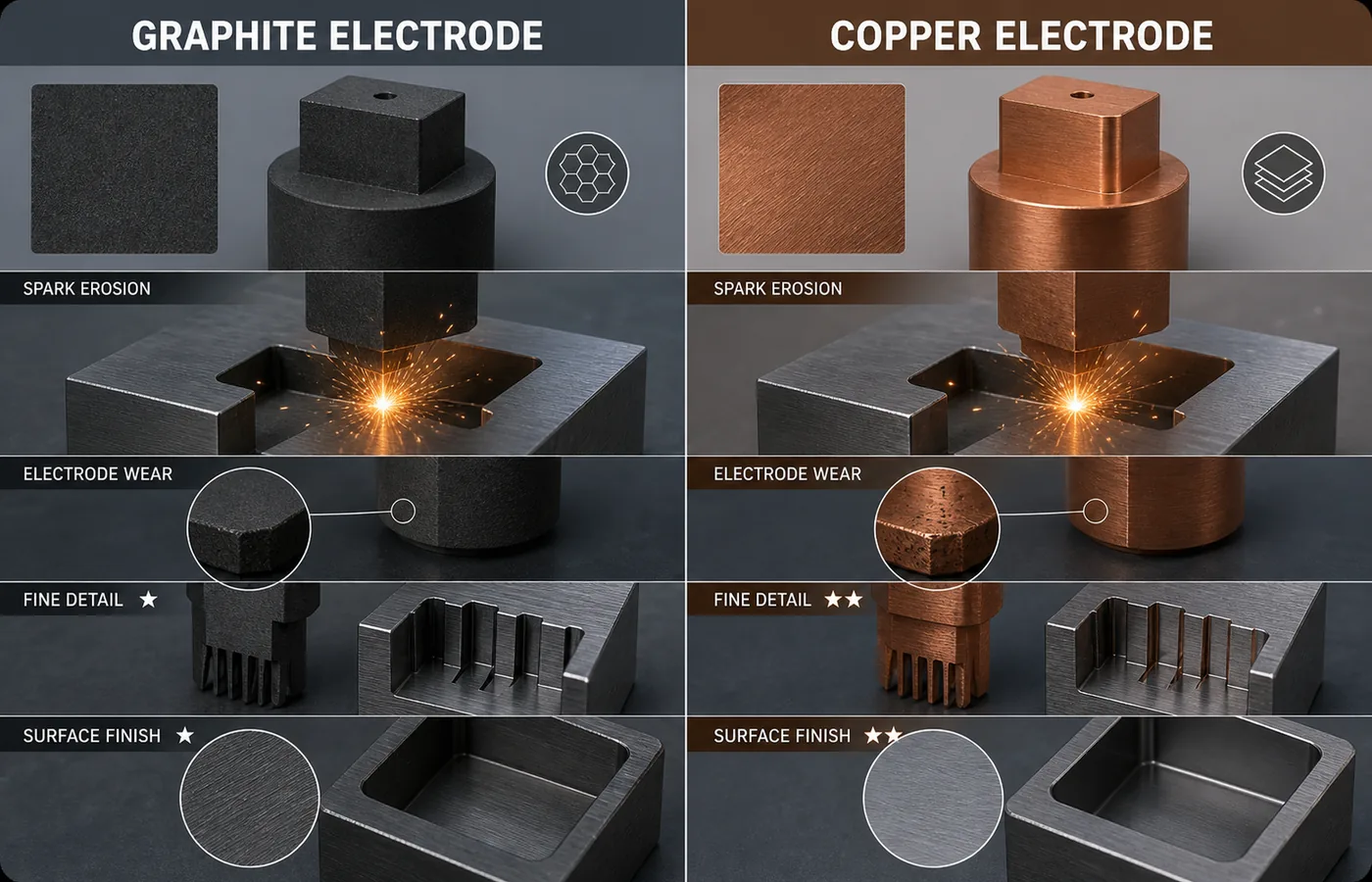
Graphite and copper electrodes trade roughing speed, detail, wear, machining effort, and surface finish differently in Sinker EDM. A practical Sinker EDM job often uses graphite for efficient roughing and copper or copper-tungsten for the final detail.
Quick Answer
Graphite and copper electrodes trade roughing speed, detail, wear, machining effort, and surface finish differently in Sinker EDM.
Comparison Summary
Choose the First Route When
Choose copper for fine detail, stable sharp features, and selected finishes; use dedicated rough and finish electrodes when one material cannot optimize both. The consequence changes fit, function, or service performance for the Graphite vs Copper EDM Electrodes decision; it is not only a change in surface appearance.
Choose the Second Route When
Choose graphite for efficient roughing and larger cavities when electrode machining speed and low wear matter more than fragile edge detail. When planning Graphite vs Copper EDM Electrodes, apply the requirement only to the dimensions and faces that control fit, function, service life, or documented release.
Where a Hybrid Route Works
A practical Sinker EDM job often uses graphite for efficient roughing and copper or copper-tungsten for the final detail. Using one electrode material for every stage can increase wear, lose sharp features, or add unnecessary electrode-machining time.
How the Processes Differ
Electrode material changes wear, detail retention, machining speed, and achievable finish. Graphite is easy to shape and suits large cavities or high removal, while copper retains fine detail and supports cleaner finishing in many small cavities. Tungsten and copper-tungsten are used when stiffness and wear resistance matter at very small feature sizes. This mechanism explains the limits and behavior that matter when planning Graphite vs Copper EDM Electrodes.
Grade and Condition Comparison
| Condition or material | Best fit | Main EDM planning concern |
|---|---|---|
| C110 copper | maximum conductivity and heat-transfer features | soft edges and high heat flow affect support and finish |
| C260 brass | formed connector and decorative components | zinc-bearing alloy behavior differs from pure copper |
| C360 brass | free-machining fittings and prototypes | not the first choice for fatigue-sensitive spring contacts |
| Beryllium copper | spring contacts and wear-resistant conductive features | condition and handling requirements must be documented |
Graphite vs Copper EDM Electrodes Drawing and Release Checkpoints
- Identify the controlled feature, material condition, access direction, and functional datum for this Graphite vs Copper EDM Electrodes decision.
- Separate dimensional requirements from texture, edge, recast, corrosion, fatigue, or post-process acceptance.
- State the inspection method, sampling or first-article requirement, drawing revision, quantity, and any documentation needed for release.
Limits and Better Alternatives
Main Limit
For Graphite vs Copper EDM Electrodes, the guide applies to the named technical decision and does not replace the drawing-specific review of geometry, material, setup, and inspection. When that boundary dominates, use tungsten copper or another specialized electrode for fine wear-sensitive features, and use Wire EDM when the geometry is a through profile.
Consider Another Route When
Use tungsten copper or another specialized electrode for fine wear-sensitive features, and use Wire EDM when the geometry is a through profile.
Practical Next Step
For this material family, surface acceptance follows the exact grade and condition. Choose graphite for efficient roughing and larger cavities when electrode machining speed and low wear matter more than fragile edge detail.
What to Remember
Graphite and copper electrodes trade roughing speed, detail, wear, machining effort, and surface finish differently in Sinker EDM. A comparison is complete when each feature has a justified process route and both routes share the same datum and release criteria.
Technical Reference
Use the values as planning references and define the functional requirement on the controlled drawing.
Use This Guide to Prepare Your RFQ
Contact us when your drawing and requirements are ready for review.
- Drawing or part sketch
- Material grade
- Thickness / part size
- Quantity
STEP/STP, DXF, DWG, PDF, IGS/IGES or ZIP.
Confidential drawing review. NDA support available on request.
Frequently Asked Questions
When is graphite preferred?
For efficient roughing, larger cavities, and easy electrode machining.
When is copper preferred?
For fine detail, selected finishes, and stable thin features.
Why use separate electrodes?
Roughing and finishing need different gaps, wear allowances, and textures.
Is one electrode material always better?
No. Cavity geometry, current density, finish, wear, and shop capability decide.