
Technical Reference
Edm Prototype Before Batch
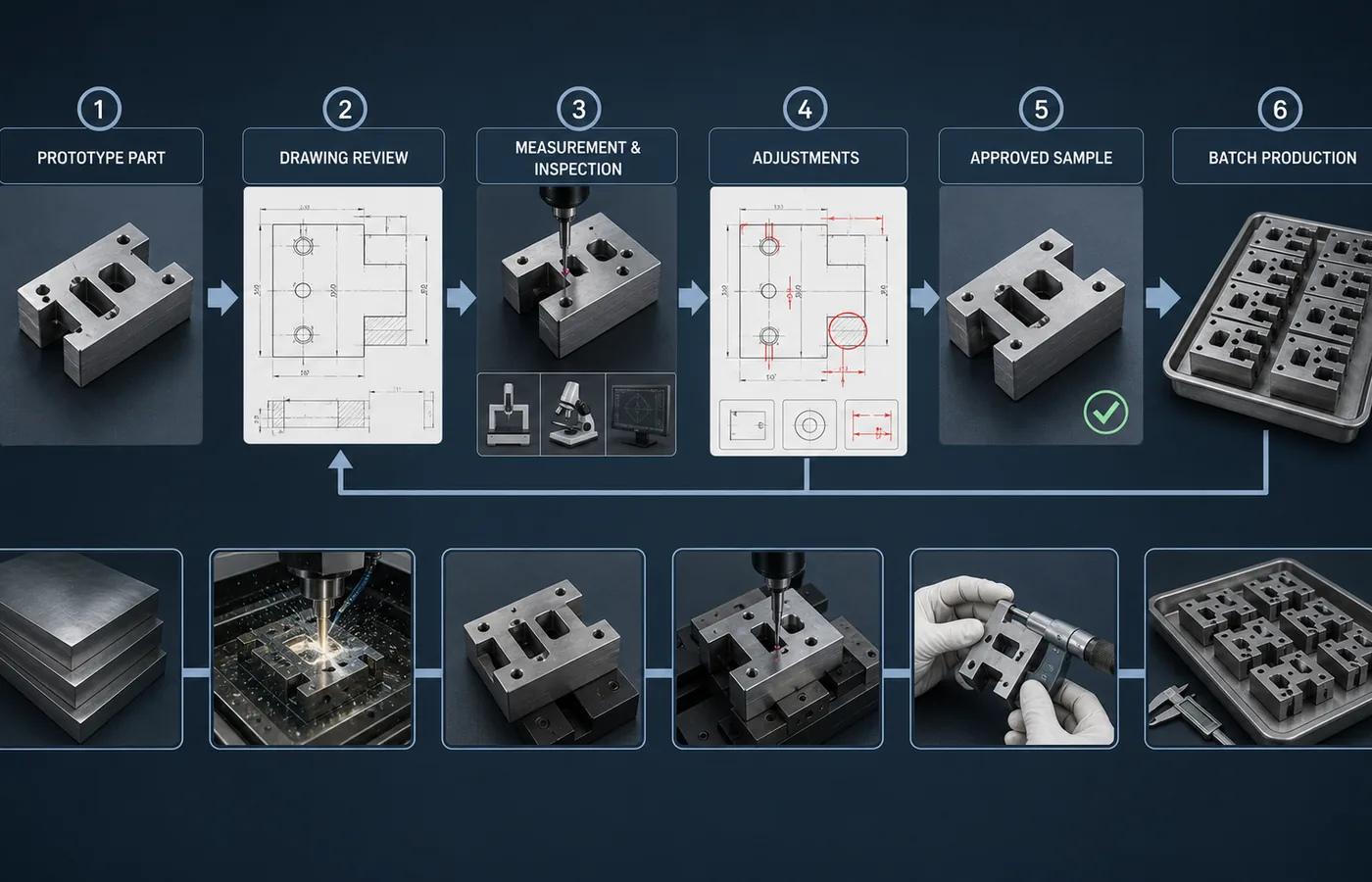
A prototype or first article is useful before batch production when fit, edge, surface integrity, material response, or inspection repeatability carries rework risk. Skipping prototype or first-article approval moves unresolved geometry, surface, inspection, and repeatability risk directly into the batch.
Quick Answer
A prototype or first article is useful before batch production when fit, edge, surface integrity, material response, or inspection repeatability carries rework risk.
RFQ Preparation Points
What to Send
A sample made to incomplete notes cannot protect the batch from a later requirement change. The consequence changes fit, function, or service performance for the Prototype Before Batch Production decision; it is not only a change in surface appearance.
How to Use the Files
Approve the released drawing revision, inspection report, and any surface or functional result before starting the batch. When planning Prototype Before Batch Production, apply the requirement only to the dimensions and faces that control fit, function, service life, or documented release.
What Causes Delays
Skipping prototype or first-article approval moves unresolved geometry, surface, inspection, and repeatability risk directly into the batch. A production quantity does not remove the need to prove the critical feature first.
What Each Input Does
Prototype work should prove the riskiest feature, surface, and inspection method before a batch is released. A first article or coupon is useful when the drawing combines a difficult material condition with tight geometry or surface-integrity acceptance. This mechanism explains the limits and behavior that matter when planning Prototype Before Batch Production.
EDM Prototype Before Batch Production Reference
| What you're asking | What you can expect |
|---|---|
| Driver | Planning effect |
| Setup | programming and fixture effort |
| Machining | cut length, cavity volume, depth, or passes |
| Electrodes | design, manufacture, count, and wear |
| Inspection | method, report, and samples |
| Quantity | prototype, first article, and batch strategy |
How the Review Uses the Information
Use a simpler conventional route on easy geometry and reserve EDM, detailed reports, and extra finishing for the features that need them. Skipping prototype or first-article approval moves unresolved geometry, surface, inspection, and repeatability risk directly into the batch.
Inspection and Surface Inputs
Assign surface, edge, and sub-surface requirements only where they affect function, and give each requirement its own acceptance method. For Prototype Before Batch Production, tie the accepted condition to the feature and inspection method named in the drawing.
Prototype Before Batch Production Drawing and Release Checkpoints
- Identify the controlled feature, material condition, access direction, and functional datum for this Prototype Before Batch Production decision.
- Separate dimensional requirements from texture, edge, recast, corrosion, fatigue, or post-process acceptance.
- State the inspection method, sampling or first-article requirement, drawing revision, quantity, and any documentation needed for release.
Practical Next Step
Assign surface, edge, and sub-surface requirements only where they affect function, and give each requirement its own acceptance method. Approve the released drawing revision, inspection report, and any surface or functional result before starting the batch.
What to Remember
A prototype or first article is useful before batch production when fit, edge, surface integrity, material response, or inspection repeatability carries rework risk. Quotation and production should use the same controlled revision, material, quantity, process scope, and inspection requirements.
Technical Reference
Use the values as planning references and define the functional requirement on the controlled drawing.
Use This Guide to Prepare Your RFQ
Contact us when your drawing and requirements are ready for review.
- Drawing or part sketch
- Material grade
- Thickness / part size
- Quantity
STEP/STP, DXF, DWG, PDF, IGS/IGES or ZIP.
Confidential drawing review. NDA support available on request.
Frequently Asked Questions
What drives EDM cost most?
Geometry, setup, passes, electrodes, material handling, and inspection.
Does higher quantity always reduce lead time?
No. Batch machining and inspection still scale with the route.
When is a sample useful?
When fit, surface, edge, or repeatability is expensive to correct later.
How can cost be reduced?
Widen nonfunctional tolerances and use fine finish only on functional faces.