
Technical Reference
Edm Export Material Review
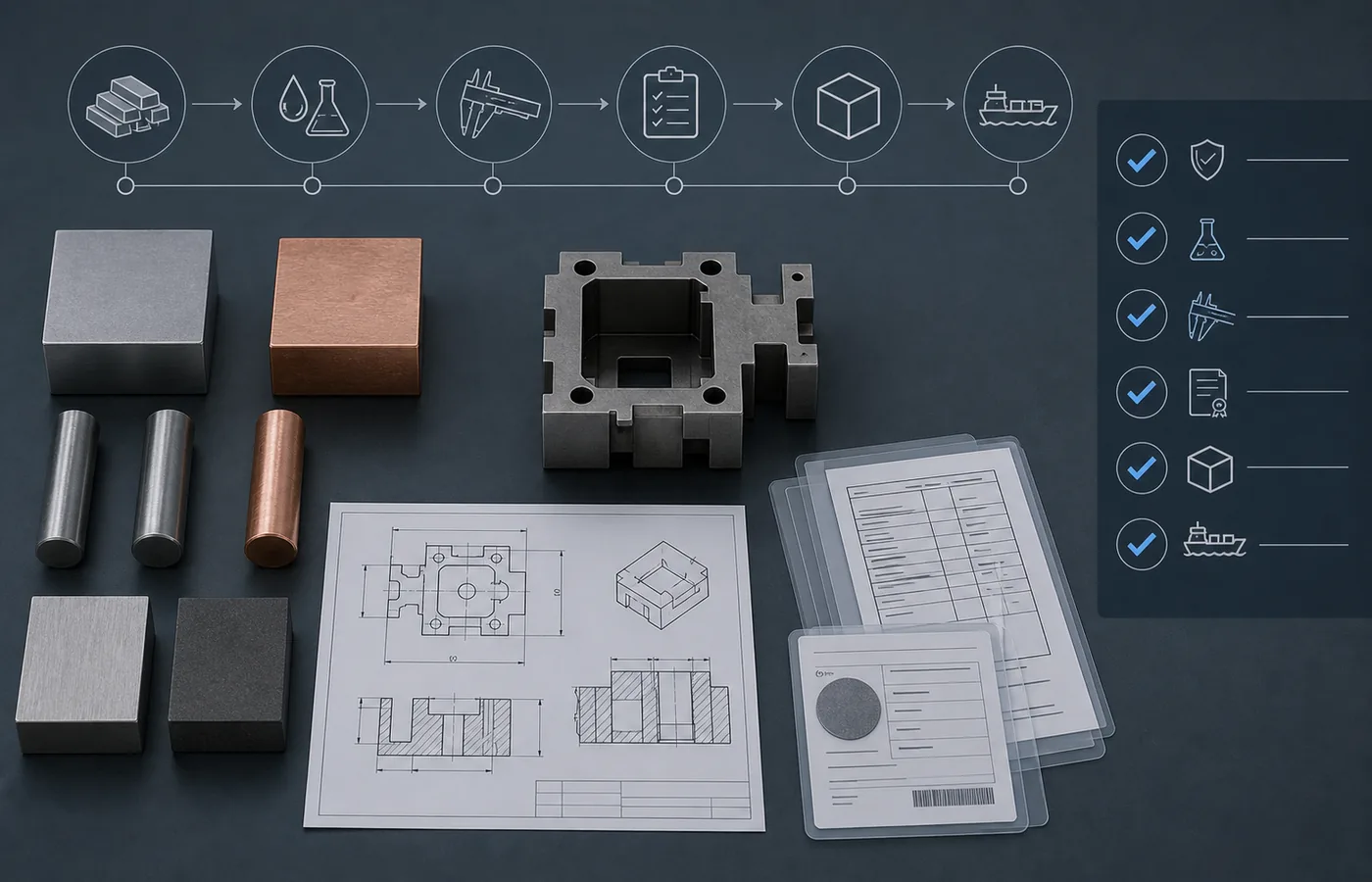
A material export review should be triggered by the exact alloy, controlled substance status, destination, and end use—not by a broad metal-family name. The material may machine correctly and still fail release when grade traceability, end-use restrictions, destination documentation, or certificate requirements are incomplete.
Quick Answer
A material export review should be triggered by the exact alloy, controlled substance status, destination, and end use—not by a broad metal-family name.
Key Material Points
Material Behavior
Unnecessary export language can obstruct normal parts, while an actual restricted material or end use cannot be resolved after production. The consequence changes fit, function, or service performance for the Material Export Review decision; it is not only a change in surface appearance.
Process Fit
Confirm the material specification and shipment context only when a real restriction or documentation requirement exists. When planning Material Export Review, apply the requirement only to the dimensions and faces that control fit, function, service life, or documented release.
Risks to Manage
The material may machine correctly and still fail release when grade traceability, end-use restrictions, destination documentation, or certificate requirements are incomplete. Export review must be resolved before the quotation fixes the material and production route.
How the Material Responds
EDM machinability and export review are separate decisions. A material may cut normally yet still require confirmation of exact alloy designation, composition, end use, destination, customer identity, or controlled-document requirements before quotation or shipment. The technical file should therefore tie the drawing material callout and condition to the commercial classification used for review; a vague label such as “tungsten alloy” or “special nickel” is not enough to establish either machining behavior or export status.
EDM Material Export Review Guide Reference
| What you're asking | What you can expect |
|---|---|
| What to define | What to state |
| Material | exact grade and condition |
| Geometry | through, blind, hole, or miniature feature |
| Surface | functional face and acceptance |
| Inspection | dimensional and metallurgical method |
Condition and Process Behavior
Material release for export-sensitive work depends on exact grade, chemistry, condition, origin, end use, destination, and certificate scope. A commercial family name such as titanium alloy or nickel alloy is not enough to select the route or documentation. Freeze the controlled material designation and traceability requirements before quotation so technical and export review use the same record.
Surface Integrity
Assign surface, edge, and sub-surface requirements only where they affect function, and give each requirement its own acceptance method. For Material Export Review, tie the accepted condition to the feature and inspection method named in the drawing.
Material Export Review Drawing and Release Checkpoints
- Identify the controlled feature, material condition, access direction, and functional datum for this Material Export Review decision.
- Separate dimensional requirements from texture, edge, recast, corrosion, fatigue, or post-process acceptance.
- State the inspection method, sampling or first-article requirement, drawing revision, quantity, and any documentation needed for release.
Limits and Better Alternatives
Main Limit
Technical machinability does not clear a material for release. Exact alloy, condition, origin, end use, destination, controlled-content status, and certificate scope must be resolved before quotation and production use the same material record.
Practical Next Step
Assign surface, edge, and sub-surface requirements only where they affect function, and give each requirement its own acceptance method. Confirm the material specification and shipment context only when a real restriction or documentation requirement exists.
What to Remember
A material export review should be triggered by the exact alloy, controlled substance status, destination, and end use—not by a broad metal-family name. Material-family guidance becomes actionable only after grade, state, functional face, and post-process acceptance are fixed.
Technical Reference
Use the values as planning references and define the functional requirement on the controlled drawing.
Use This Guide to Prepare Your RFQ
Contact us when your drawing and requirements are ready for review.
- Drawing or part sketch
- Material grade
- Thickness / part size
- Quantity
STEP/STP, DXF, DWG, PDF, IGS/IGES or ZIP.
Confidential drawing review. NDA support available on request.
Frequently Asked Questions
Does normal EDM machinability mean export approval is automatic?
No. Machining feasibility and export review are separate. Alloy identity, end use, destination, and customer or document requirements can still need review.
Why is a trade name not enough?
Trade names can hide composition or controlled elements. Use the formal alloy designation, specification, and condition on the drawing and commercial documents.
What information is needed before quotation?
Provide exact material, quantity, destination, end use, drawing revision, customer identity where required, and any certification or controlled-document request.
Can the review change after the drawing changes?
Yes. A material, end-use, quantity, destination, or controlled-feature change can alter the review and must be checked against the new revision.