
Process & Material
Nickel 200 Sinker EDM Thickness Review (50–100 Mm)
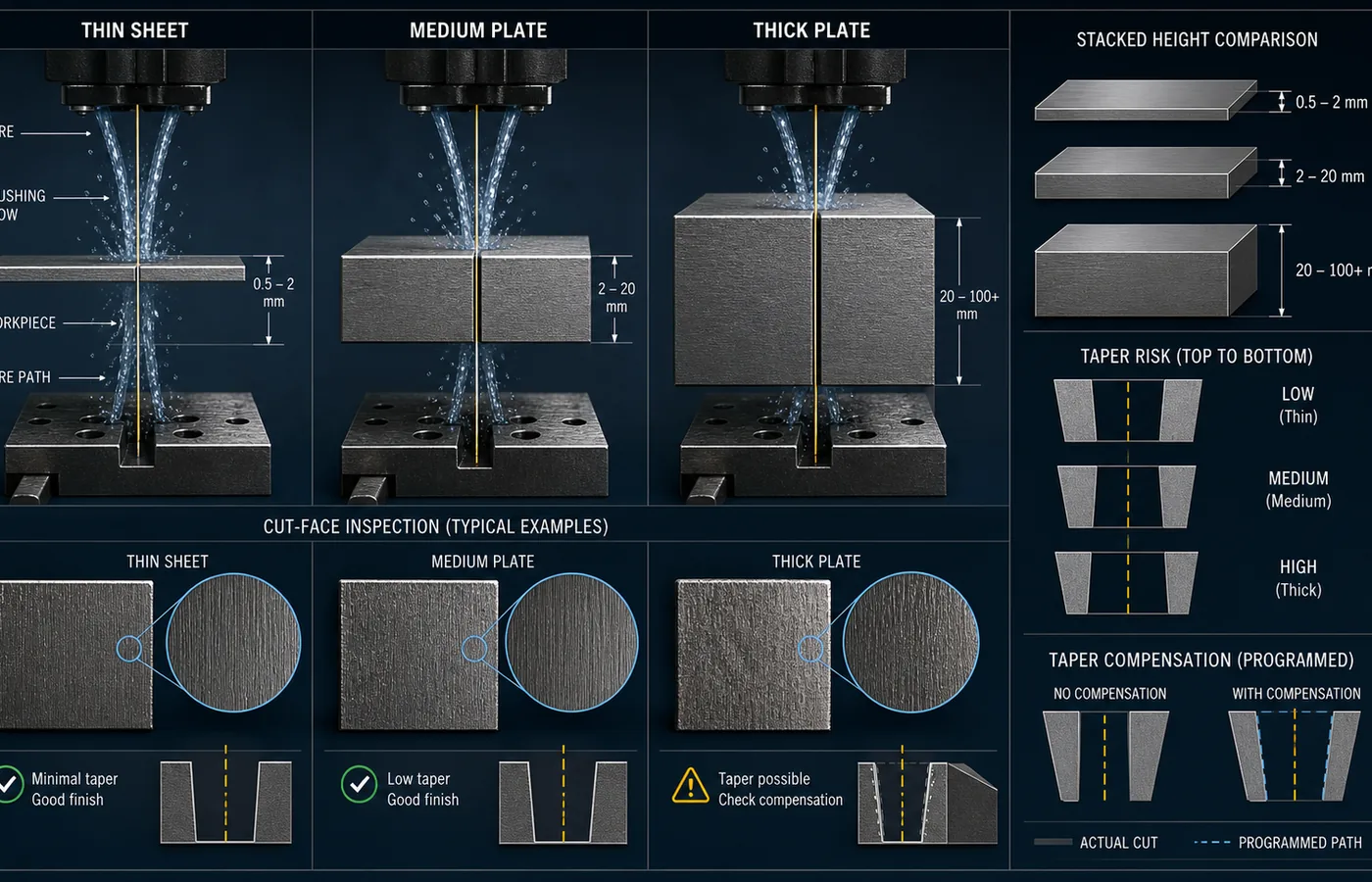
Nickel 200 at 50–100 mm changes how Sinker EDM must be supported, flushed, finished, and inspected. The controlling dimension is cavity depth and width, rib thickness, electrode access, electrode wear, flushing and debris evacuation, not merely the outside stock size.
Quick Answer
For Sinker EDM on Nickel 200, treat 50–100 mm as a setup input rather than a guaranteed accuracy band. Confirm the real cavity depth and width, rib thickness, electrode access, electrode wear, flushing and debris evacuation, material condition, datum, functional faces, and inspection method before assigning tolerance or finish.
Key Thickness Decisions
What This Thickness Range Means
A thick workpiece may affect access and fixturing, but electrode wear and cavity evacuation still govern sinker accuracy. On Nickel 200, the supplied condition still changes support and surface response. This is the Sinker EDM thickness decision; it does not turn the range into a machine promise.
Choosing the Right Setup
For Sinker EDM on Nickel 200 at 50–100 mm, plan electrode material, wear compensation, cavity depth, rib width, orbit strategy, and debris evacuation. Then state the supplied condition, support the functional features, and define surface and inspection requirements separately. Apply the tightest tolerance and finest finish only to the dimensions and faces that control function.
What to Watch For
At 50–100 mm, the failure is not simply “too thick” or “too deep.” A long electrode overhang becomes flexible and debris must travel far to exit the gap. Rib tips wear faster than the body and sidewall texture can differ from the floor. Confirm electrode stiffness, machine stroke, flushing ports, and metrology access to the cavity bottom. If the setup ignores that physical progression, the named feature can pass at the accessible face while failing at depth, at the exit, or after unclamping. The Nickel 200 condition must be included in the same inspection decision.
Technical Context
A shaped graphite or copper electrode approaches the conductive workpiece in dielectric fluid without touching it. At 50–100 mm, A long electrode overhang becomes flexible and debris must travel far to exit the gap. Rib tips wear faster than the body and sidewall texture can differ from the floor. Confirm electrode stiffness, machine stroke, flushing ports, and metrology access to the cavity bottom. Control electrode stiffness, wear, orbit, debris exit, cavity access, and bottom inspection. For Nickel 200, the supplied condition still determines support and surface acceptance.
Sinker EDM Capability Reference
| What you're asking | What you can expect |
|---|---|
| Feature types | blind cavities, ribs, shaped pockets, mold details, deep forms, and internal geometry that a traveling wire cannot reach |
| Tolerance | ±0.008–0.030 mm |
| Surface finish | Ra 0.2–6.3 μm |
| Electrode choice | Graphite or copper selected from cavity, finish, and wear needs |
| Primary cavity limit | Depth, rib width, access, and debris evacuation |
| Main limitation | Electrode access and debris evacuation limit deep, narrow blind geometry. |
Thickness Range Reference
| Thickness or depth input | What it means for this process |
|---|---|
| 50–100 mm | A thick workpiece may affect access and fixturing, but electrode wear and cavity evacuation still govern sinker accuracy. |
| Primary controls | Plan from cavity geometry, electrode access, orbit strategy, rough and finish electrodes, and the strength of the remaining walls. |
Material Condition Reference
| Condition | What to expect | Watch out for | Surface notes |
|---|---|---|---|
| solution annealed | Use stable support and conservative energy. | High-temperature alloys can retain a hard recast layer. | Identify fatigue and hot-section faces before finishing. |
| cold-worked or stabilized | Account for cold-work and service stress. | Thin features can move and electrode wear can grow corners. | Use low-energy finishing and selective metallurgical inspection. |
Thickness Impact
Nickel 200 is commercially pure nickel with high ductility and good electrical conductivity. In the 50–100 mm setup, state the supplied condition, support the functional features, and define surface and inspection requirements separately. The material condition changes support and surface response, while Sinker EDM determines how the feature is accessed and controlled.
Surface and Edge Control
For Sinker EDM on Nickel 200 at 50–100 mm, inspect the functional face or edge from its own datum. Use lower-energy finishing and inspect critical surfaces when fatigue, sealing or corrosion performance is specified. Keep texture, edge condition, recast, corrosion protection, and post-processing as separate acceptance items when service requires them.
Nickel 200 Sinker EDM Thickness Checkpoints
- Show the actual cavity depth and local wall thickness represented by 50–100 mm, not only the outside part size.
- Plan from cavity geometry, electrode access, orbit strategy, rough and finish electrodes, and the strength of the remaining walls.
- Mark the functional tolerance, finish, datum, and inspection method on the drawing.
Limits and Better Alternatives
Main Limit
The 50–100 mm label cannot replace the real cavity depth and width, rib thickness, electrode access, electrode wear, flushing and debris evacuation or the supplied Nickel 200 condition. Soft stock can smear, mark or move during fixturing even though EDM itself is noncontact.
Consider Another Route When
Use Wire EDM for through profiles, CNC for open cavities with tool access, or grinding for simple flat precision surfaces.
Practical Next Step
Send the Nickel 200 drawing with its condition, the actual cavity depth and local wall thickness in the 50–100 mm range, feature geometry, controlled tolerance, surface requirement, quantity, and inspection method.
Practical Takeaway
For Nickel 200 at 50–100 mm, plan Sinker EDM from the real feature axis, support, debris control, and inspection method instead of treating the range as a blanket capability statement.
Additional Project Information
Include application, destination and end-use notes together with the material, quantity and drawing requirements.
Project Details for Technical Review
Include application and end-use notes when they affect material, inspection, documentation, or export review.
- Process: Sinker EDM
- Material: Nickel 200
- Thickness: 50–100 mm
- Drawing or part sketch
- Material grade
- Thickness / part size
- Quantity
- Tolerance and critical dimensions
- Surface finish or inspection requirement
STEP/STP, DXF, DWG, PDF, IGS/IGES or ZIP.
Confidential drawing review. NDA support available on request.
Frequently Asked Questions
Does 50–100 mm alone define Sinker EDM capability?
No. It only describes one setup dimension. Final capability follows the actual cavity depth and width, rib thickness, electrode access, electrode wear, flushing and debris evacuation, material condition, access, datum, and inspection method.
What controls the setup in this range?
The main controls are electrode material, wear compensation, cavity depth, rib width, orbit strategy, and debris evacuation. Their importance changes with the real feature geometry rather than the nominal range label.
What should be watched on Nickel 200?
The final feature may pass size inspection while failing its surface, edge, corrosion, or stability requirement Use state the supplied condition, support the functional features, and define surface and inspection requirements separately and release only the functional dimensions and faces that have a defined acceptance method.
What should the drawing identify?
Show the true feature path or section represented by 50–100 mm, the Nickel 200 condition, controlled datum, tolerance, finish, quantity, and inspection route.