
Process & Material
2205 Duplex Stainless Steel Micro EDM Feasibility Review
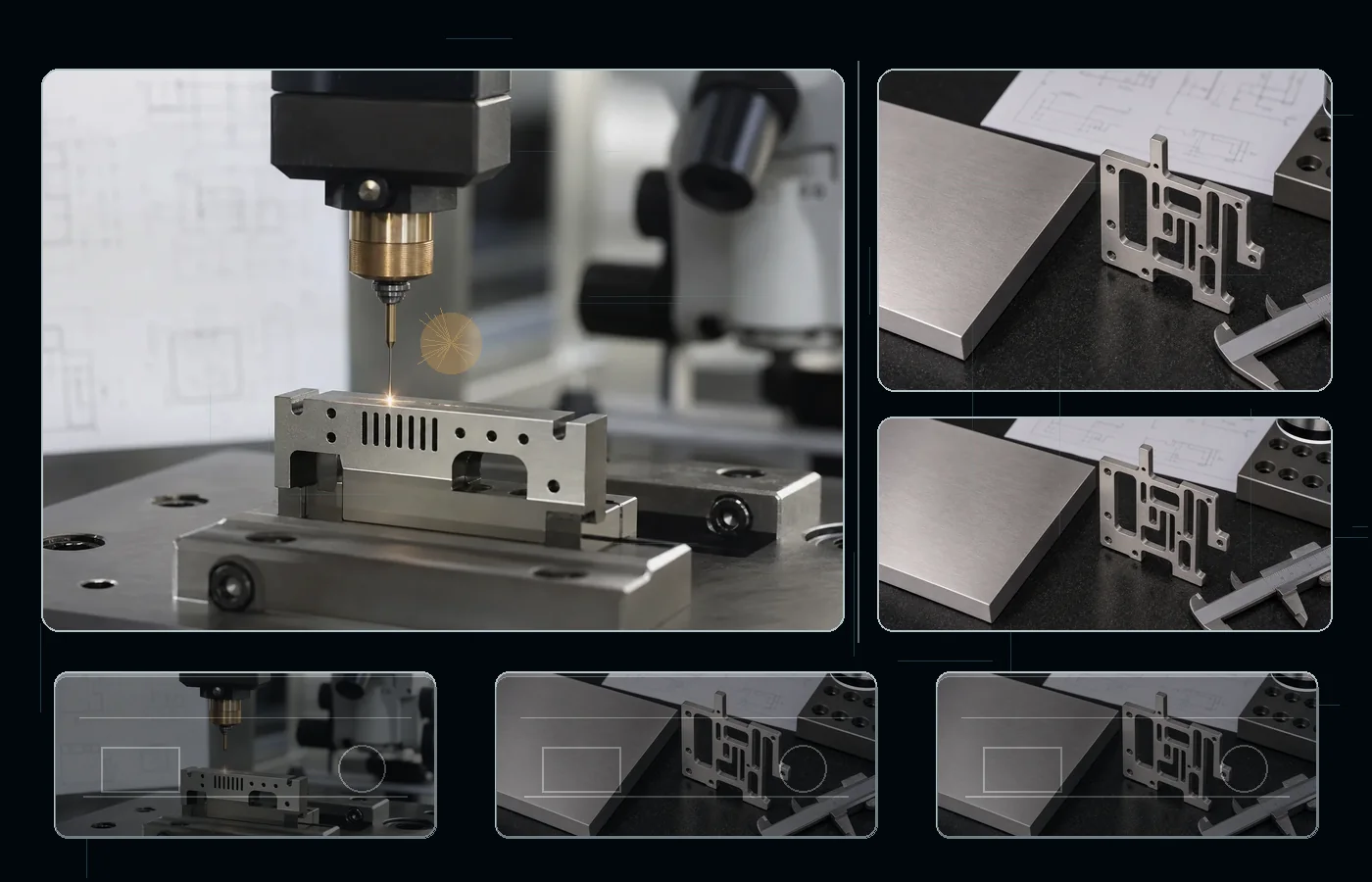
2205 Duplex Stainless Steel can be machined with Micro EDM when the geometry matches micro holes, micro slots, miniature cavities, fine pins, and sub-millimeter precision details. 2205 Duplex Stainless Steel is a duplex ferritic-austenitic stainless grade whose phase balance and high strength distinguish it from austenitic stainless; the supplied condition affects support, discharge energy, finishing, and inspection.
Quick Answer
Micro EDM is suitable for 2205 Duplex Stainless Steel when the feature is a micro hole, micro slot, miniature cavity, fine pin, or other sub-millimeter detail. The supplied condition must be stated before tolerance and surface requirements are confirmed.
Key Material Decisions
How This Material Behaves
A duplex ferritic-austenitic stainless grade whose phase balance and high strength distinguish it from austenitic stainless. In Micro EDM, the supplied condition directly changes discharge stability, electrode wear, edge quality, and the finishing plan—especially at micro scale.
Choosing the Right Condition
Choose Micro EDM for micro holes, micro slots, miniature cavities, fine pins, and sub-millimeter precision details. State the exact 2205 Duplex Stainless Steel condition, then set tolerance, finish, support, and inspection from the controlled feature rather than the whole part.
Risks to Manage
For Micro EDM, surface heating and post-process exposure should not compromise corrosion-critical faces or phase-sensitive requirements. Temperature drift and electrode calibration can consume the remaining dimensional allowance before the feature is measured as micro-flushing, temperature and metrology become part of the same tolerance chain; acceptance must focus on phase-sensitive surfaces and chloride-exposed features. On 2205 Duplex Stainless Steel, the resulting defect can be local dimensional variation and phase-sensitive surface alteration at the microfeature scale. For 2205 Duplex Stainless Steel, control local heating, avoid unnecessary dwell, and define cleaning or surface restoration for corrosion-critical faces. Use calibrated electrodes and metrology that resolves the actual remaining tolerance; document geometry, local surface alteration and corrosion-critical phase condition for 2205 Duplex Stainless Steel.
How Micro EDM Works on 2205 Duplex Stainless Steel
Micro EDM uses a very small electrode and low discharge energy to machine miniature features in 2205 Duplex Stainless Steel. Electrode wear, spark-gap stability, micro-flushing, temperature control and measurement resolution consume a significant share of the available tolerance. The local feature size and aspect ratio—not the overall workpiece size—must define the route.
Micro EDM Capability Reference
| What you're asking | What you can expect |
|---|---|
| Feature types | micro holes, micro slots, miniature cavities, fine pins, and sub-millimeter precision details |
| Tolerance | ±0.002–0.010 mm |
| Surface finish | Ra 0.1–1.6 μm |
| Feature scale | Sub-millimeter holes, slots, and cavities |
| Primary micro limit | Electrode wear and measurement resolution |
| Main limitation | Loose-tolerance or easily accessible features are rarely economical with Micro EDM. |
Material Condition Reference
| Condition | What to expect | Watch out for | Surface notes |
|---|---|---|---|
| solution annealed | Use stable support and identify the final heat-treatment route. | Softer condition can mark or move under clamping. | Separate cosmetic roughness from corrosion and passivation requirements. |
| cold-worked | Control cold-work stress and finish energy. | Cold-worked or welded zones can distort unevenly. | Inspect corrosion, seal, and fatigue faces separately. |
| welded and stress-managed | Use lower-energy finishing on hardened or aged faces. | A brittle recast layer or local heat tint can reduce corrosion and fatigue performance. | Use selective recast removal and passivation where required. |
How This Material Behaves
2205 duplex stainless steel has roughly equal ferrite and austenite in its microstructure. In EDM, the two phases respond differently to discharge heat, and aggressive roughing or uncontrolled post-processing can disturb corrosion-critical surface condition. Use controlled finishing on wetted or sealing faces, keep passivation and recast acceptance separate, and verify the supplied solution-annealed or worked condition before release. For Micro EDM, surface heating and post-process exposure should not compromise corrosion-critical faces or phase-sensitive requirements. On miniature features, temper, recast and contamination can occupy the same scale as the remaining tolerance.
Surface Integrity and Post-Process
For Micro EDM on 2205 Duplex Stainless Steel, sealing, fatigue and corrosion surfaces should separate roughness from recast-layer or passivation requirements. Use low-energy finishing and account for electrode replacement or calibration before final sizing. Specify edge, recast and post-process requirements only on functional microfeatures, and use metrology that can distinguish true size from edge rounding and surface residue.
2205 Duplex Stainless Steel Micro EDM Checkpoints
- Confirm that the feature matches micro holes, micro slots, miniature cavities, fine pins, and sub-millimeter precision details.
- State the supplied condition: solution annealed, cold-worked, and welded and stress-managed.
- Mark the controlled dimensions, functional surfaces, datum scheme, and inspection method.
Typical Parts and Features
- corrosion-resistant inserts
- medical and laboratory components
- connector features
- micro holes
- micro slots
- miniature cavities
Limits and Better Alternatives
Main Limit
Loose-tolerance or easily accessible features are rarely economical with Micro EDM. On 2205 Duplex Stainless Steel, surface heating and post-process exposure should not compromise corrosion-critical faces or phase-sensitive requirements; the supplied condition still controls support, finishing, and surface-integrity review.
Consider Another Route When
Use conventional EDM for larger features, precision laser processing for suitable thin geometry, or mechanical micro-drilling where a tool can reach.
Practical Next Step
Send the 2205 Duplex Stainless Steel drawing with condition, controlled geometry, tolerance, functional surface callouts, quantity, and inspection requirements. If the route is unclear, we will compare Micro EDM with the adjacent EDM or conventional process.
Practical Takeaway
2205 Duplex Stainless Steel is compatible with Micro EDM when the feature matches the process access. The supplied condition determines support, finishing, surface control, and inspection.
Request a Machining Feasibility Review
Send material grade, drawing files, tolerance and quantity. We confirm process fit before quoting.
- Process: Micro EDM
- Material: 2205 Duplex Stainless Steel
- Drawing or part sketch
- Material grade
- Thickness / part size
- Quantity
- Tolerance and critical dimensions
- Surface finish or inspection requirement
STEP/STP, DXF, DWG, PDF, IGS/IGES or ZIP.
Confidential drawing review. NDA support available on request.
Frequently Asked Questions
Can 2205 Duplex Stainless Steel be machined with Micro EDM?
Yes, when the feature is a micro hole, micro slot, miniature cavity, fine pin, or other sub-millimeter detail. 2205 Duplex Stainless Steel is electrically conductive and the final route follows the feature geometry and supplied condition.
What controls Micro EDM on 2205 Duplex Stainless Steel?
The main process controls are electrode wear, feature-to-electrode ratio, micro-flushing, aspect ratio, edge radius, thermal stability, and measurement resolution. The 2205 Duplex Stainless Steel condition adds dimensional-stability and surface-integrity requirements.
What is the main risk?
For Micro EDM, surface heating and post-process exposure should not compromise corrosion-critical faces or phase-sensitive requirements. Temperature drift and electrode calibration can consume the remaining dimensional allowance before the feature is measured as micro-flushing, temperature and metrology become part of the same tolerance chain; acceptance must focus on phase-sensitive surfaces and chloride-exposed features. On 2205 Duplex Stainless Steel, the resulting defect can be local dimensional variation and phase-sensitive surface alteration at the microfeature scale. For 2205 Duplex Stainless Steel, control local heating, avoid unnecessary dwell, and define cleaning or surface restoration for corrosion-critical faces. Use calibrated electrodes and metrology that resolves the actual remaining tolerance; document geometry, local surface alteration and corrosion-critical phase condition for 2205 Duplex Stainless Steel.
What should I send for review?
Send the drawing, exact 2205 Duplex Stainless Steel condition, controlled geometry, tolerance, functional surface requirements, quantity, and inspection expectations. If any item is undecided, send what you have and we will help complete the review.