
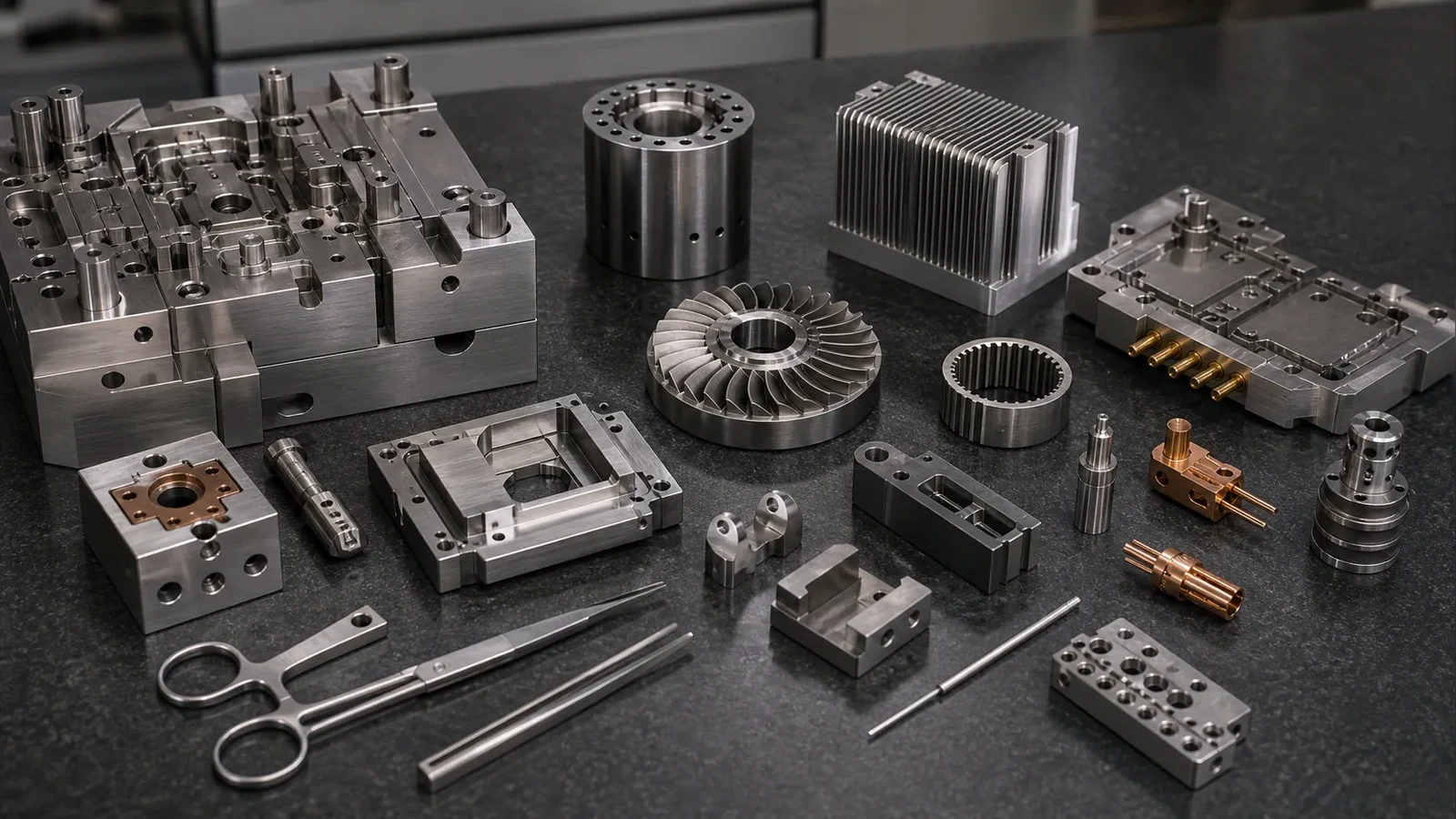
Mold & Die / Tooling | EDM Applications
EDM application pages for mold inserts, die components, tooling details, fixtures and precision tooling materials.
EDM application pages for mold inserts, die components, tooling details, fixtures and precision tooling materials.
- 387 EDM review pages in this section
- Grouped by process, material, application, thickness, tolerance and drawing requirement
- Use the cards below to find the closest review path before sending a drawing
Browse Review Pages
Mold & Die / Tooling
Use this directory to find EDM review pages by process, material, application, thickness, tolerance, surface finish or drawing requirement.
Application Review
Injection Mold Tooling EDM Machining for 3003 Aluminum
3003 Aluminum can support corrosion-resistant fixtures, prototype tooling, or low-wear components, but it is not the first choice for a production wear edge. The application risk is electrode-access limits, rib damage or…
Application Review
Injection Mold Tooling EDM Machining for 300M Alloy Steel
300M Alloy Steel can be reviewed for Injection Mold Tooling, but the exact role of the part must justify the material’s strength, corrosion, wear, thermal, and documentation characteristics. The application risk is…
Application Review
Injection Mold Tooling EDM Machining for 304 Stainless Steel
304 Stainless Steel can support corrosion-resistant fixtures, prototype tooling, or low-wear components, but it is not the first choice for a production wear edge. The application risk is electrode-access limits, rib damage…
Application Review
Injection Mold Tooling EDM Machining for 316L Stainless Steel
316L Stainless Steel can support corrosion-resistant fixtures, prototype tooling, or low-wear components, but it is not the first choice for a production wear edge. The application risk is electrode-access limits, rib damage…
Application Review
Injection Mold Tooling EDM Machining for 410 Stainless Steel
410 Stainless Steel can be reviewed for Injection Mold Tooling, but the exact role of the part must justify the material’s strength, corrosion, wear, thermal, and documentation characteristics. The application risk is…
Application Review
Injection Mold Tooling EDM Machining for 4140 Alloy Steel
4140 Alloy Steel can be reviewed for Injection Mold Tooling, but the exact role of the part must justify the material’s strength, corrosion, wear, thermal, and documentation characteristics. The application risk is…
Application Review
Injection Mold Tooling EDM Machining for 420 Stainless Steel
420 Stainless Steel is a practical material for Injection Mold Tooling when its supplied condition matches the functional surfaces and load case. The application risk is electrode-access limits, rib damage or an…
Application Review
Injection Mold Tooling EDM Machining for 4340 Alloy Steel
4340 Alloy Steel can be reviewed for Injection Mold Tooling, but the exact role of the part must justify the material’s strength, corrosion, wear, thermal, and documentation characteristics. The application risk is…
Application Review
Injection Mold Tooling EDM Machining for 440C Stainless Steel
440C Stainless Steel can be reviewed for Injection Mold Tooling, but the exact role of the part must justify the material’s strength, corrosion, wear, thermal, and documentation characteristics. The application risk is…
Application Review
Injection Mold Tooling EDM Machining for 5052 Aluminum
5052 Aluminum can support corrosion-resistant fixtures, prototype tooling, or low-wear components, but it is not the first choice for a production wear edge. The application risk is electrode-access limits, rib damage or…
Application Review
Injection Mold Tooling EDM Machining for 6061 Aluminum
6061 Aluminum can support corrosion-resistant fixtures, prototype tooling, or low-wear components, but it is not the first choice for a production wear edge. The application risk is electrode-access limits, rib damage or…
Application Review
Injection Mold Tooling EDM Machining for 6082 Aluminum
6082 Aluminum can support corrosion-resistant fixtures, prototype tooling, or low-wear components, but it is not the first choice for a production wear edge. The application risk is electrode-access limits, rib damage or…
Application Review
Injection Mold Tooling EDM Machining for 7075 Aluminum
7075 Aluminum can support corrosion-resistant fixtures, prototype tooling, or low-wear components, but it is not the first choice for a production wear edge. The application risk is electrode-access limits, rib damage or…
Application Review
Injection Mold Tooling EDM Machining for 8620 Alloy Steel
8620 Alloy Steel can be reviewed for Injection Mold Tooling, but the exact role of the part must justify the material’s strength, corrosion, wear, thermal, and documentation characteristics. The application risk is…
Application Review
Injection Mold Tooling EDM Machining for 904L Stainless Steel
904L Stainless Steel can be reviewed for Injection Mold Tooling, but the exact role of the part must justify the material’s strength, corrosion, wear, thermal, and documentation characteristics. The application risk is…
Application Review
Injection Mold Tooling EDM Machining for A2 Tool Steel
A2 Tool Steel is a practical material for Injection Mold Tooling when its supplied condition matches the functional surfaces and load case. The application risk is electrode-access limits, rib damage or an…
Application Review
Injection Mold Tooling EDM Machining for AZ31 Magnesium Alloy
AZ31 Magnesium Alloy can be reviewed for Injection Mold Tooling, but the exact role of the part must justify the material’s strength, corrosion, wear, thermal, and documentation characteristics. The application risk is…
Application Review
Injection Mold Tooling EDM Machining for AZ91 Magnesium Alloy
AZ91 Magnesium Alloy can be reviewed for Injection Mold Tooling, but the exact role of the part must justify the material’s strength, corrosion, wear, thermal, and documentation characteristics. The application risk is…
Application Review
Injection Mold Tooling EDM Machining for Bearing Bronze
Bearing Bronze is normally selected for electrodes, heat-transfer details, or conductive contact features rather than structural wear tooling. The application risk is electrode-access limits, rib damage or an EDM texture that conflicts…
Application Review
Injection Mold Tooling EDM Machining for Beryllium Copper
Beryllium Copper is normally selected for electrodes, heat-transfer details, or conductive contact features rather than structural wear tooling. The application risk is electrode-access limits, rib damage or an EDM texture that conflicts…
Application Review
Injection Mold Tooling EDM Machining for C110 Copper
C110 Copper is normally selected for electrodes, heat-transfer details, or conductive contact features rather than structural wear tooling. The application risk is electrode-access limits, rib damage or an EDM texture that conflicts…
Application Review
Injection Mold Tooling EDM Machining for C260 Brass
C260 Brass is normally selected for electrodes, heat-transfer details, or conductive contact features rather than structural wear tooling. The application risk is electrode-access limits, rib damage or an EDM texture that conflicts…
Application Review
Injection Mold Tooling EDM Machining for C360 Brass
C360 Brass is normally selected for electrodes, heat-transfer details, or conductive contact features rather than structural wear tooling. The application risk is electrode-access limits, rib damage or an EDM texture that conflicts…
Application Review
Injection Mold Tooling EDM Machining for Cemented Carbide
Cemented Carbide can be reviewed for Injection Mold Tooling, but the exact role of the part must justify the material’s strength, corrosion, wear, thermal, and documentation characteristics. The application risk is electrode-access…
Application Review
Injection Mold Tooling EDM Machining for Cobalt Chrome
Cobalt Chrome can be reviewed for Injection Mold Tooling, but the exact role of the part must justify the material’s strength, corrosion, wear, thermal, and documentation characteristics. The application risk is electrode-access…
Application Review
Injection Mold Tooling EDM Machining for Conductive Silicon Carbide
Conductive Silicon Carbide can be reviewed for Injection Mold Tooling, but the exact role of the part must justify the material’s strength, corrosion, wear, thermal, and documentation characteristics. The application risk is…
Application Review
Injection Mold Tooling EDM Machining for D2 Tool Steel
D2 Tool Steel is a practical material for Injection Mold Tooling when its supplied condition matches the functional surfaces and load case. The application risk is electrode-access limits, rib damage or an…
Application Review
Injection Mold Tooling EDM Machining for DC53 Tool Steel
DC53 Tool Steel can be reviewed for Injection Mold Tooling, but the exact role of the part must justify the material’s strength, corrosion, wear, thermal, and documentation characteristics. The application risk is…
Application Review
Injection Mold Tooling EDM Machining for Electrical Steel
Electrical Steel can be reviewed for Injection Mold Tooling, but the exact role of the part must justify the material’s strength, corrosion, wear, thermal, and documentation characteristics. The application risk is electrode-access…
Application Review
Injection Mold Tooling EDM Machining for Graphite
Graphite can be reviewed for Injection Mold Tooling, but the exact role of the part must justify the material’s strength, corrosion, wear, thermal, and documentation characteristics. The application risk is electrode-access limits,…
Application Review
Injection Mold Tooling EDM Machining for H13 Tool Steel
H13 Tool Steel is a practical material for Injection Mold Tooling when its supplied condition matches the functional surfaces and load case. The application risk is electrode-access limits, rib damage or an…
Application Review
Injection Mold Tooling EDM Machining for Hastelloy C276
Hastelloy C276 can be reviewed for Injection Mold Tooling, but the exact role of the part must justify the material’s strength, corrosion, wear, thermal, and documentation characteristics. The application risk is electrode-access…
Application Review
Injection Mold Tooling EDM Machining for Inconel 625
Inconel 625 can be reviewed for Injection Mold Tooling, but the exact role of the part must justify the material’s strength, corrosion, wear, thermal, and documentation characteristics. The application risk is electrode-access…
Application Review
Injection Mold Tooling EDM Machining for Inconel 718
Inconel 718 can be reviewed for Injection Mold Tooling, but the exact role of the part must justify the material’s strength, corrosion, wear, thermal, and documentation characteristics. The application risk is electrode-access…
Application Review
Injection Mold Tooling EDM Machining for Inconel X-750
Inconel X-750 can be reviewed for Injection Mold Tooling, but the exact role of the part must justify the material’s strength, corrosion, wear, thermal, and documentation characteristics. The application risk is electrode-access…
Application Review
Injection Mold Tooling EDM Machining for Invar 36
Invar 36 can be reviewed for Injection Mold Tooling, but the exact role of the part must justify the material’s strength, corrosion, wear, thermal, and documentation characteristics. The application risk is electrode-access…
Application Review
Injection Mold Tooling EDM Machining for Kovar
Kovar can be reviewed for Injection Mold Tooling, but the exact role of the part must justify the material’s strength, corrosion, wear, thermal, and documentation characteristics. The application risk is electrode-access limits,…
Application Review
Injection Mold Tooling EDM Machining for M2 High Speed Steel
M2 High Speed Steel can be reviewed for Injection Mold Tooling, but the exact role of the part must justify the material’s strength, corrosion, wear, thermal, and documentation characteristics. The application risk…
Application Review
Injection Mold Tooling EDM Machining for Maraging Steel
Maraging Steel can be reviewed for Injection Mold Tooling, but the exact role of the part must justify the material’s strength, corrosion, wear, thermal, and documentation characteristics. The application risk is electrode-access…
Application Review
Injection Mold Tooling EDM Machining for Molybdenum
Molybdenum can be reviewed for Injection Mold Tooling, but the exact role of the part must justify the material’s strength, corrosion, wear, thermal, and documentation characteristics. The application risk is electrode-access limits,…
Application Review
Injection Mold Tooling EDM Machining for Monel 400
Monel 400 can be reviewed for Injection Mold Tooling, but the exact role of the part must justify the material’s strength, corrosion, wear, thermal, and documentation characteristics. The application risk is electrode-access…
Application Review
Injection Mold Tooling EDM Machining for Nickel 200
Nickel 200 can be reviewed for Injection Mold Tooling, but the exact role of the part must justify the material’s strength, corrosion, wear, thermal, and documentation characteristics. The application risk is electrode-access…
Application Review
Injection Mold Tooling EDM Machining for Niobium
Niobium can be reviewed for Injection Mold Tooling, but the exact role of the part must justify the material’s strength, corrosion, wear, thermal, and documentation characteristics. The application risk is electrode-access limits,…
Application Review
Injection Mold Tooling EDM Machining for Nitinol
Nitinol can be reviewed for Injection Mold Tooling, but the exact role of the part must justify the material’s strength, corrosion, wear, thermal, and documentation characteristics. The application risk is electrode-access limits,…
Application Review
Injection Mold Tooling EDM Machining for O1 Tool Steel
O1 Tool Steel can be reviewed for Injection Mold Tooling, but the exact role of the part must justify the material’s strength, corrosion, wear, thermal, and documentation characteristics. The application risk is…
Application Review
Injection Mold Tooling EDM Machining for P20 Mold Steel
P20 Mold Steel is a practical material for Injection Mold Tooling when its supplied condition matches the functional surfaces and load case. The application risk is electrode-access limits, rib damage or an…
Application Review
Injection Mold Tooling EDM Machining for Phosphor Bronze
Phosphor Bronze is normally selected for electrodes, heat-transfer details, or conductive contact features rather than structural wear tooling. The application risk is electrode-access limits, rib damage or an EDM texture that conflicts…
Application Review
Injection Mold Tooling EDM Machining for Platinum
Platinum can be reviewed for Injection Mold Tooling, but the exact role of the part must justify the material’s strength, corrosion, wear, thermal, and documentation characteristics. The application risk is electrode-access limits,…