
Application Review
Electronics Connectors EDM Machining for C260 Brass
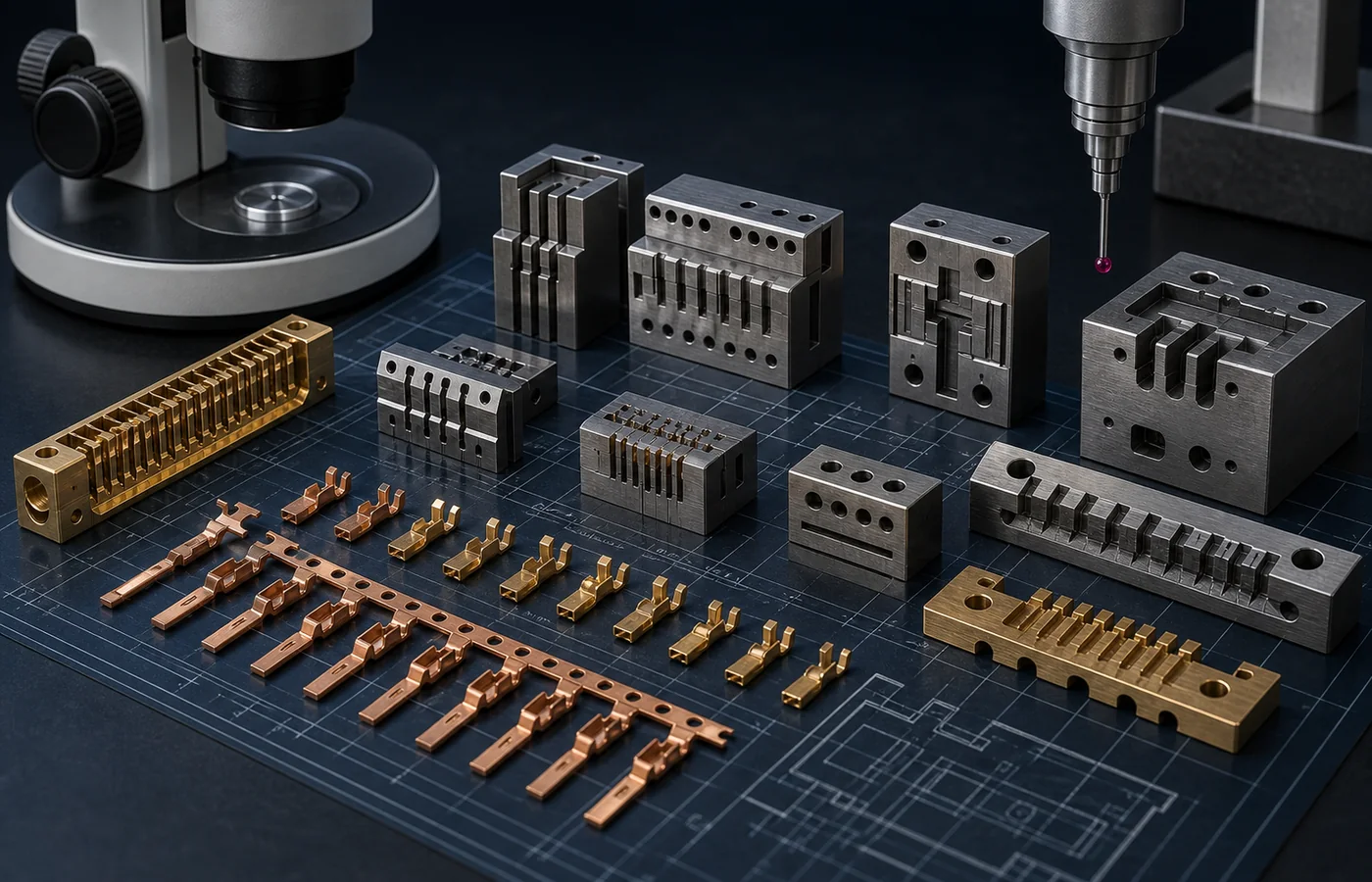
C260 Brass is a practical material for Electronics Connectors when its supplied condition matches the functional surfaces and load case. In Electronics Connectors, the functional requirements are fine slots, contact profiles, pitch control and burr-free conductive edges. The material-specific concerns are that rolled temper and grain direction can affect thin sections, springback and edge stability.
Quick Answer
C260 Brass can be considered for Electronics Connectors, but first confirm that its strength, corrosion, wear, thermal, and documentation profile fits the actual part. Route each feature to Wire, Sinker, Small Hole, or Micro EDM from its access geometry.
Key Application Decisions
What's at Stake
In Electronics Connectors, the part fails when pitch accumulation, contact-edge damage or distortion in thin conductive material. C260 Brass is cartridge brass with good conductivity and strong cold-forming response; its role must be justified by the actual load, environment, wear, temperature, corrosion, or contact requirement.
How to Get It Right
Use C260 Brass only where its properties match the functional part. Route through profiles, blind forms, difficult holes, and miniature details to the appropriate EDM process, then define slot width, burr/recast, contact surfaces. Compare the material with the alternatives listed below before freezing the drawing.
What Can Go Wrong
If grade, condition, or functional face is not controlled, soft edges and lower structural strength limit primary load or high-wear cutting roles can defeat the application requirement for contact resistance, slot width, edge quality, spring behavior, and plating. A technically successful EDM cut does not correct a poor material choice. Keep C260 Brass within this permitted role: electrical contacts, heat-transfer details, electrodes, bearing features, and busbar tooling.
How EDM Fits the Application
EDM is selected feature by feature for Electronics Connectors: Wire for through profiles, Sinker for blind forms, Small Hole for difficult holes, and Micro EDM for miniature details. On C260 Brass, the supplied condition determines support, finishing energy, post-processing, and inspection.
C260 Brass Application Reference
| What matters | What to expect |
|---|---|
| Material behavior | cartridge brass with good conductivity and strong cold-forming response |
| Material-specific concern | rolled temper and grain direction can affect thin sections, springback and edge stability |
| Surface action | use gentle fixturing and a finish strategy that protects contact, sealing or heat-transfer surfaces |
Electronics Connectors Application Planning
| What matters | What to expect |
|---|---|
| Typical parts | contact stamping inserts, connector profiles, terminal tooling, and micro-slot features |
| Functional requirement | fine slots, contact profiles, pitch control and burr-free conductive edges |
| Main failure risk | pitch accumulation, contact-edge damage or distortion in thin conductive material |
| Inspection focus | slot width, burr/recast, contact surfaces |
| Planning context | Pitch and profile requirements are often concentrated in the ±0.005–0.020 mm range, while selected tooling surfaces may use Ra 0.4–1.6 μm. |
Material Choices for This Application
C260 Brass is a direct option for Electronics Connectors when the part benefits from electrical or thermal conductivity and useful bearing/contact behavior. Its main limitation is soft edges and lower structural strength limit primary load or high-wear cutting roles, so the EDM plan must connect the exact condition to contact resistance, slot width, edge quality, spring behavior, and plating. Use it on roles that need those properties rather than selecting it only because it is conductive. Consider these alternatives where the current material does not fit the functional role: Beryllium copper / phosphor bronze fits spring contacts with better fatigue life; material condition and plating surfaces must be protected; 304 / 316L stainless fits structural shells and corrosion-resistant details; lower conductivity than copper alloys; Kovar / nickel alloys fits controlled expansion or hermetic connector features; slower processing and specialized surface requirements.
Functional Surface and Edge Control
Mark the Electronics Connectors edges, contact, seal, wear, alignment, or cosmetic faces that carry the function. Inspect slot width, burr/recast, contact surfaces separately. For C260 Brass, manage the material-specific risks: Rolled temper and grain direction can affect thin sections, springback and edge stability. Do not approve the part from one broad Ra value.
Electronics Connectors Buyer Checkpoints
- Identify the feature whose failure would cause pitch accumulation, contact-edge damage or distortion in thin conductive material.
- State the exact C260 Brass condition and define the datum and method for slot width, burr/recast, contact surfaces.
- Send functional surface notes, quantity, drawing revision, and documentation needs before quotation.
Common Applications
- contact stamping inserts
- connector profiles
- terminal tooling
- micro-slot features
Limits and Better Alternatives
Main Limit
C260 Brass compatibility does not select the EDM process or prove that the material is suitable for every Electronics Connectors function.
Consider Another Route When
Use another conductive alloy when strength, corrosion, wear, thermal expansion, or documentation requirements fit Electronics Connectors better; use conventional machining when the geometry is open and EDM adds no functional value.
Practical Next Step
For an EDM review of Electronics Connectors in C260 Brass, send the drawing, exact condition, critical feature, tolerance, functional surfaces, quantity, and the inspection or documentation requirements. If the material choice is uncertain, we can compare it with a better-fitting alloy before quotation.
Practical Takeaway
C260 Brass can be used for Electronics Connectors only where its material properties support the functional demand. Route each feature to the correct EDM process and release slot width, burr/recast, contact surfaces with the functional surface requirements.
Check If This Applies to Your Project
Send application notes and a drawing for a project-specific feasibility check.
- Material: C260 Brass
- Application: Electronics Connectors
- Drawing or part sketch
- Material grade
- Thickness / part size
- Quantity
- Tolerance and critical dimensions
- Surface finish or inspection requirement
STEP/STP, DXF, DWG, PDF, IGS/IGES or ZIP.
Confidential drawing review. NDA support available on request.
Frequently Asked Questions
Why consider C260 Brass for Electronics Connectors?
C260 Brass is a practical material for Electronics Connectors when its supplied condition matches the functional surfaces and load case. The exact condition must still be checked against the material-specific risks: Rolled temper and grain direction can affect thin sections, springback and edge stability.
What is the biggest application risk?
The application risk is pitch accumulation, contact-edge damage or distortion in thin conductive material. The material risk is separate: Rolled temper and grain direction can affect thin sections, springback and edge stability. We manage both through feature routing, condition-aware support, selective finishing, and an application-specific inspection plan.
Can prototype and production requirements both be supported?
Yes. Use a sample or first-article approval when slot width, burr/recast, contact surfaces, surface integrity, fit, and batch repeatability must be confirmed. The material must also be appropriate for the production wear, corrosion, strength, and temperature requirements.
What information is needed for quotation?
Send the drawing, exact C260 Brass condition, critical feature, tolerance, functional surfaces, quantity, and the inspection or documentation requirements. If the material choice is uncertain, send the available package and we will identify the missing process and material decisions.