
Application Review
Sinker EDM for Aerospace Engine / Turbine Components
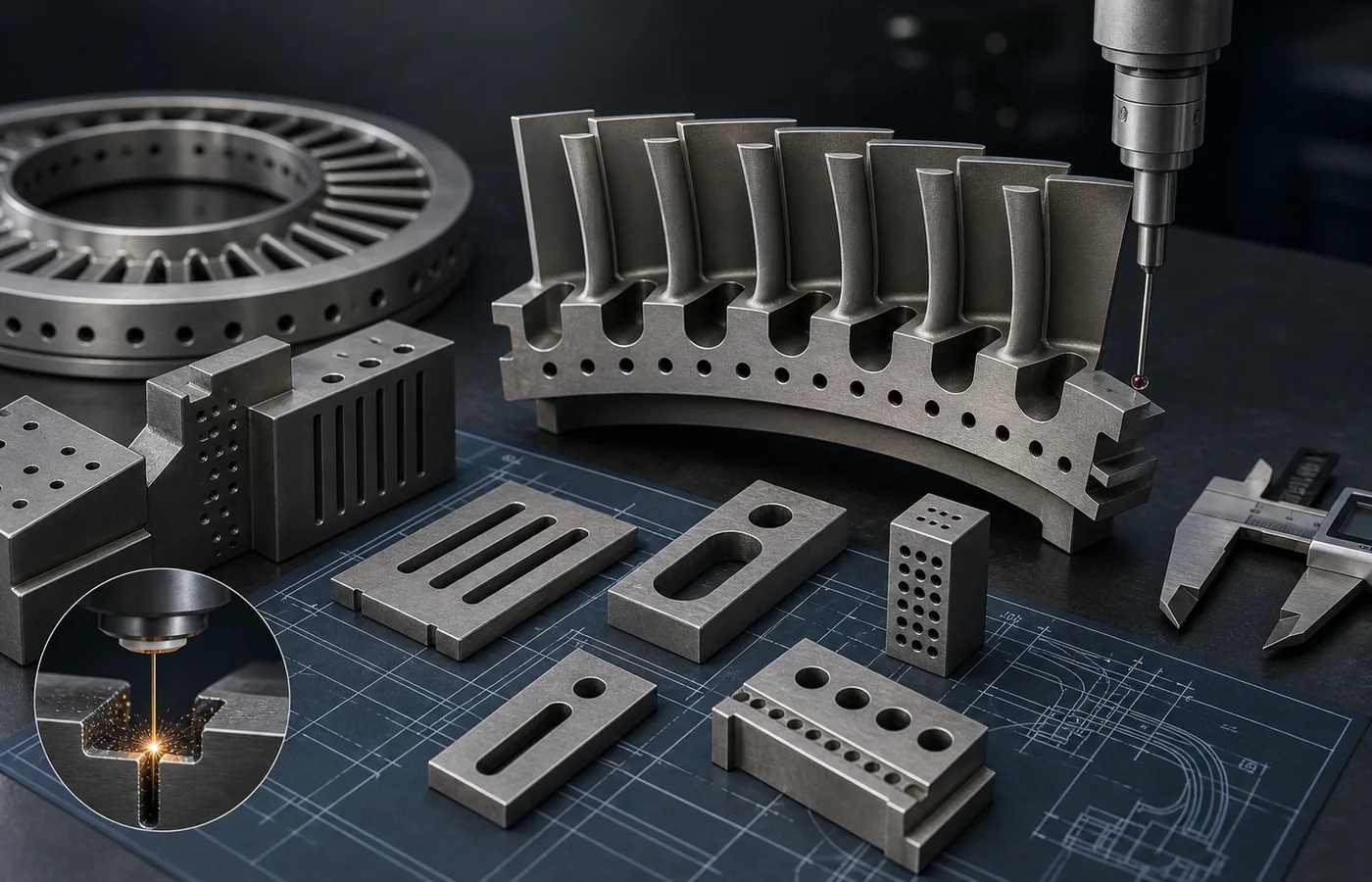
Sinker EDM is useful in Aerospace Engine / Turbine Components when the named feature matches blind cavity, rib, or shaped internal form. The decision depends on high-temperature alloy profiles, cooling-hole features, sealing geometry and fatigue-sensitive surfaces, the material condition, and the inspection method—not on the application name alone.
Quick Answer
Choose Sinker EDM for Aerospace Engine / Turbine Components when the feature is a blind cavity, rib, pocket, or internal form that a shaped electrode can reach from one side. Plan the route around critical profiles, hole location, surface integrity, material certs, inspection reports, because the main production risk is recast, microcracks or edge damage on fatigue- and temperature-critical surfaces.
Key Application Decisions
What's at Stake
In Aerospace Engine / Turbine Components, the feature must support high-temperature alloy profiles, cooling-hole features, sealing geometry and fatigue-sensitive surfaces. Sinker EDM removes the feature without cutting force, but the main service risk remains recast, microcracks or edge damage on fatigue- and temperature-critical surfaces. The process is justified only when its access and surface behavior solve that specific problem.
How to Get It Right
Use Sinker EDM for blind cavity, rib, or shaped internal form. On the drawing, state material and condition, the controlled feature, datum, functional surfaces, and critical profiles, hole location, surface integrity, material certs, inspection reports. Select the material from the industry priorities below rather than from a generic conductive-material list.
What Can Go Wrong
If the feature can be made more simply by another process, Sinker EDM adds cost without improving function. If it is selected correctly but electrode material, wear compensation, cavity depth, rib width, orbit strategy, and debris evacuation are not planned, the cavity floor can dish, corners can grow, and deep ribs can vary when electrode wear or debris evacuation is not controlled. In Aerospace Engine / Turbine Components, the result may be a rejected datum, damaged functional edge, unstable fit, or failed application-specific inspection.
How EDM Fits the Application
Sinker EDM reproduces a shaped electrode as a blind form and uses orbit or jump motion to distribute wear and move debris. For Aerospace Engine / Turbine Components, that makes it possible to form inaccessible cavities, ribs, and internal details tied to high-temperature alloy profiles, cooling-hole features, sealing geometry and fatigue-sensitive surfaces without a rotating cutter entering the geometry. Electrode material, orbit, and flushing are selected so the blind feature does not fail from recast, microcracks or edge damage on fatigue- and temperature-critical surfaces.
Sinker EDM Capability Reference
| What you're asking | What you can expect |
|---|---|
| Feature types | blind cavities, ribs, shaped pockets, mold details, deep forms, and internal geometry that a traveling wire cannot reach |
| Tolerance | ±0.008–0.030 mm |
| Surface finish | Ra 0.2–6.3 μm |
| Electrode choice | Graphite or copper selected from cavity, finish, and wear needs |
| Primary cavity limit | Depth, rib width, access, and debris evacuation |
| Main limitation | Electrode access and debris evacuation limit deep, narrow blind geometry. |
Aerospace Engine / Turbine Components Application Planning
| What matters | What to expect |
|---|---|
| Typical parts | turbine seals, cooling-hole components, heat-resistant alloy profiles, and precision engine fixtures |
| Functional requirement | high-temperature alloy profiles, cooling-hole features, sealing geometry and fatigue-sensitive surfaces |
| Main failure risk | recast, microcracks or edge damage on fatigue- and temperature-critical surfaces |
| Inspection focus | critical profiles, hole location, surface integrity, material certs, inspection reports |
| Planning context | Critical profiles and hole locations are commonly planned in the ±0.005–0.020 mm range, with selected functional surfaces using Ra 0.4–1.6 μm when required. |
Application Context
Material choice for Aerospace Engine / Turbine Components should follow temperature, fatigue life, oxidation resistance, and surface-integrity acceptance, not a generic list of conductive alloys. Inconel 718 / 625: use it for high-temperature strength and oxidation resistance for hot-section and sealing features; slow EDM and strict recast control on fatigue faces. Ti-6Al-4V: use it for high strength-to-weight ratio for cooler structural and compressor features; surface contamination and fatigue-sensitive recast require explicit acceptance. 15-5PH / 17-4PH: use it for stable high-strength fixtures and cooler engine hardware; aging condition must be stated. 2024 / 7075 aluminum: use it for lightweight non-hot structural or fixture parts; corrosion protection and residual-stress control are more important than heat resistance. The selected grade must also suit the Sinker EDM access and inspection plan. If the material is undecided, send the drawing and service conditions so the alternatives can be compared before quotation.
Functional Surface and Edge Control
For Sinker EDM in Aerospace Engine / Turbine Components, inspect the named functional feature rather than the whole part. Separate geometry from edge or surface acceptance, and focus on critical profiles, hole location, surface integrity, material certs, inspection reports. The release route should address recast, microcracks or edge damage on fatigue- and temperature-critical surfaces.
Aerospace Engine / Turbine Components Buyer Checkpoints
- Identify which Sinker EDM feature controls high-temperature alloy profiles, cooling-hole features, sealing geometry and fatigue-sensitive surfaces.
- Define the datum and inspection method for critical profiles, hole location, surface integrity, material certs, inspection reports.
- State material condition, functional surfaces, quantity, drawing revision, and documentation needs before quotation.
Common Applications
- turbine seals
- cooling-hole components
- heat-resistant alloy profiles
- precision engine fixtures
Limits and Better Alternatives
Main Limit
Sinker EDM is not the right route when the Aerospace Engine / Turbine Components feature does not match blind cavities, ribs, shaped pockets, mold details, deep forms, and internal geometry that a traveling wire cannot reach.
Consider Another Route When
Use Wire EDM for through profiles, CNC machining for open cavities with tool access, or grinding for simple flat precision surfaces.
Practical Next Step
For an EDM review of Aerospace Engine / Turbine Components, send the drawing, material and condition, the Sinker EDM feature, tolerance, functional surfaces, quantity, and the inspection or documentation requirements.
Practical Takeaway
For Aerospace Engine / Turbine Components, use Sinker EDM only where its access and surface behavior solve the actual feature problem. Release the material, functional surfaces, and critical profiles, hole location, surface integrity, material certs, inspection reports together.
Check If This Applies to Your Project
Send application notes and a drawing for a project-specific feasibility check.
- Process: Sinker EDM
- Application: Aerospace Engine / Turbine Components
- Drawing or part sketch
- Material grade
- Thickness / part size
- Quantity
- Tolerance and critical dimensions
- Surface finish or inspection requirement
STEP/STP, DXF, DWG, PDF, IGS/IGES or ZIP.
Confidential drawing review. NDA support available on request.